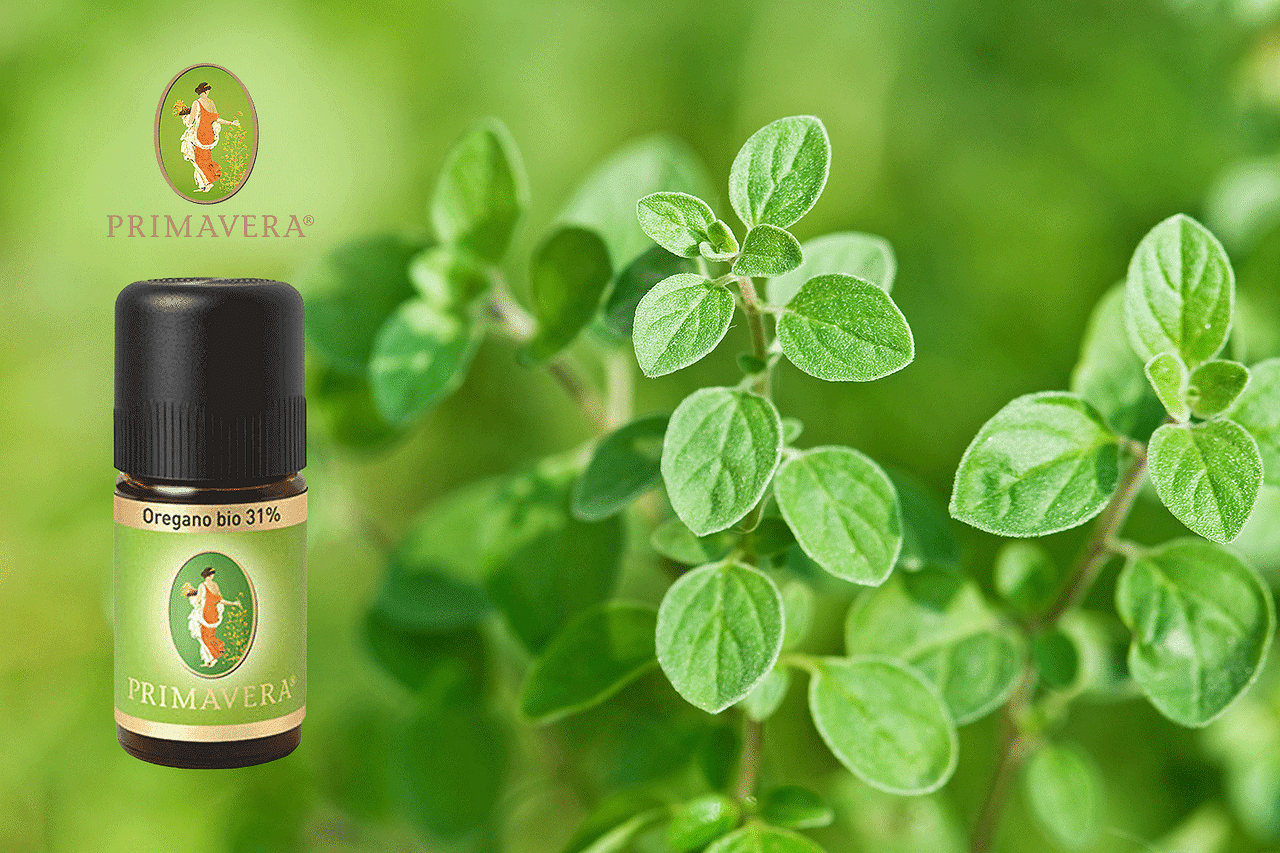
Oregano essential oil ( Origanum vulgare ) is a powerful oil with many beneficial properties, and it should always be treated with great care. It is popular for its pain-relieving and anti-inflammatory properties, and it also strengthens the immune system. The oil has an extremely beneficial effect on the respiratory system. It is also used in cosmetic products against nail fungus, acne, and mouth ulcers. It is a strong antioxidant that helps fight free radicals. Oregano oil is an immunostimulant with a powerful anti-inflammatory effect. Its strong antibacterial effect is due to its ability to penetrate cell membranes and disrupt their integrity.

HARVEST
Spring and early summer

PART OF THE PLANT
The leaves and flowers of the plant

METHOD OF EXTRACTION
Steam distillation
Oil for health and tone
Oregano is found in the wild almost everywhere in Bulgaria and is a well-known spice in every household. Oregano belongs to the so-called "hot oils" and must be diluted as much as possible in a base oil when applied to the skin, as it can cause an allergic skin reaction. Its aroma is strong, with a pronounced spicy, herbal-warm nuance, and its color is pale yellow.
| Botanical name Origanum vulgare | Aroma profile Herbal, spicy, camphorous |
| family Lamiaceae | fragrance Base note |
| Origin The Mediterranean | application It has a skin-brightening and anti-aging effect; the oil has antispasmodic, antiseptic and anti-allergic properties. |
History and interesting facts
Oregano has been used medicinally for 4000 years by ancient Chinese, Greek, and Roman physicians and healers. It has been used as a traditional remedy for digestive ailments, respiratory problems (asthma, bronchitis, cough, etc.), colds, flu-like conditions, and inflammation of the mouth and throat.
Its name means "mountain joy" and originates from ancient Greece. It has been used since the time of Hippocrates. In Greek mythology, oregano was created by the goddess Aphrodite as a symbol of happiness. In China, it was used as a remedy for high fever, vomiting, diarrhea, and skin irritations of various origins. The essential oil was used externally to relieve headaches, rheumatism, pain of various origins, and was applied after insect bites and stings.
Before World War II, oregano was in short supply in America. American soldiers sent to Italy liked it as a spice and brought it back to America.
Extraction methods and features
Oregano is a perennial herbaceous plant of the family Lamiaceae. It grows in scrub and clearings, on rocky places and in sparse forests, mainly in the foothills. It forms a tuft in which about 80–100 stems can grow, and it reaches a height of up to 80 cm. Its flowering usually begins in early June and continues until the end of August.
The essential oil is extracted by steam distillation from the flowers of the dried herb. To obtain 450–900 grams of oil, about 450–680 kilograms of leaves are needed. It is a clear yellowish liquid (darkening over time), with a warm, herbal, camphorous and slightly spicy aroma. It mixes well with lavandin, pine, lavender, citronella, rosemary, camphor and cedar. The active ingredient of oregano oil is carvacrol, with its content varying between 75–80%.
A search of the PubMed database (one of the largest databases for medical and pharmaceutical information in the world) included more than 1200 studies on carvacrol, a phenol that acts in a very interesting way against bacteria. It penetrates their outer cell membrane, and these changes in bacterial structures allow the immune system to recognize and destroy the invaders.
At the same time, carvacrol is harmless to healthy tissues. In addition to carvacrol, oregano essential oil contains thymol , gamma -terpinene , para- cymene , beta- caryophyllene , rosmarinic acid , and myrcene , among many other compounds. Like green tea, oregano contains high amounts of polyphenols, tannins, anthocyanins, and flavonoids—making it an excellent antitumor and anti-aging agent. In fact, oregano is richer in phenols than many other commonly used herbs.
Useful properties of oregano essential oil
| Mental Application: Calms, balances the mind, improves concentration and sleep | Psychological action: Soothing, stimulating |
| Physical Application: Soothes redness, irritation, bites and discomfort associated with arthritis and injuries, acne; immune-stimulating, expectorant for coughs and sore throats | Physical action: Analgesic, antirheumatic, antiseptic, antispasmodic, antitoxic, antiviral, bactericidal, carminative, cytophylactic, diuretic, expectorant, stimulating, tonic. |
In aromatherapy
As we said at the beginning, oregano is a very powerful essential oil and its use should be approached with caution. It can be used in cleaning products to disinfect surfaces, especially in the fall and winter period and during flu epidemics.
When diluted very well in massage mixtures, it helps with joint pain associated with wear and tear in the elderly. It also acts as an expectorant when your lungs and nose feel congested. It has antifungal properties that can help with skin blemishes or other problems.
When inhaled, the aroma of oregano oil has a calming effect, allowing the brain and body to relax. Similarly, a few drops on your pillow can promote faster sleep.
Diffusing oregano oil can reduce cold and cough symptoms when inhaled deeply, thanks to its expectorant properties. Individuals suffering from nasal congestion due to coughs and colds may find that the accumulated mucus loosens and disperses much more easily when blowing their nose. Flu symptoms and general malaise may be reduced when oregano oil is inhaled.
For women suffering from irregular menstrual cycles, the emmenagogue properties of oregano oil can help balance mood, as it is also believed to balance hormonal changes.
Oregano oil can be used to clear sinus infections by placing a few drops in a bowl of hot water and leaning over it for a few minutes to inhale the aromatic vapors with a towel placed over your head and bowl. Alternatively, 1–2 drops of oregano essential oil can be added to a clean, dry handkerchief and the aroma inhaled.
Locally in cosmetics
Used topically, oregano oil can improve skin conditions such as psoriasis, acne, eczema, and fungal infections by killing yeast, bacteria, and fungi. Its anti-inflammatory properties can help relieve pain, itching, and general discomfort from insect stings and bites. Muscle aches, joint pain, and rashes can also be relieved. Be sure to dilute oregano oil with a carrier oil ( jojoba , sweet almond , grapeseed , etc.) before applying it to the skin. The resulting massage oil can also be used on the lower back or stomach to promote digestion. Avoid using it on broken skin, as the oil can cause irritation.
- Dilution instructions for use on the skin: Dilute up to a maximum of 1% in your favorite topical carrier oil. Use it for skin pigmentation or fungal problems.
- Diffusion instructions: Add a drop or two to your diffusion blend for an intense green, herbal aroma.
It combines well with cayenne, Roman chamomile, citronella, fennel, lemon eucalyptus, geranium, sweet marjoram, niaouli 1,8-cineole, Scots pine, rosemary 1,8-cineole, and thyme.
Recipes with oregano essential oil

If you find yourself with a compromised immune system and getting an infection (bacterial, fungal or viral), try this multipurpose roll-on:
Multi-functional roll-on to fight infections
- 2 drops lemongrass essential oil
- 2 drops orange essential oil
- 2 drops oregano essential oil
- 2 drops tea tree essential oil
- 2 drops thyme essential oil
- sweet almond or jojoba
- 10 ml glass roll-on bottle

Pour the essential oils into the bottle. Top up with carrier oil and shake gently to mix. Apply to the soles of the feet and abdomen twice daily until the infection is resolved. Do not use for more than three weeks at a time.
Moisturizing lotion with oregano oil to soothe dry skin
- 14 drops oregano essential oil
- 2 drops lemon essential oil
- 60 ml avocado base oil
- 60 ml coconut oil

Sterilize a 200ml glass jar by placing it in boiling water. Remove from heat and allow to cool. Melt the coconut oil. Pour the avocado oil and essential oils into the glass jar, then finally pour in the coconut oil. Allow the oils to blend well by placing the jar in the refrigerator. When the mixture has hardened into a soft lotion, it can be used to moisturize any area of dry skin without leaving a greasy residue.
Safety instructions
Due to its high phenol content, oregano oil is extremely potent. Use with caution! Always dilute oregano oil with a neutral organic base oil (almond, coconut, olive, etc.) before use, as it can irritate the skin or nasal mucosa. Never apply essential oils near the eyes, in the ear canal, or on sensitive parts of the body.
Do not use oil of oregano on infants and young children under 5 years of age, or on pets. Pregnant and nursing women should also avoid oil of oregano, as it can cross the placenta into the fetus or into breast milk. It may cause miscarriage.
Conclusion
The information in this article is for educational purposes only and is not intended to be a basis for prevention or treatment! The International Federation of Professional Aromatherapists (IFPA) does not recommend that essential oils be taken internally unless under the supervision of a physician qualified in clinical aromatherapy! Like medications, essential oils should be treated with respect. It is important to seek professional advice and carefully follow the instructions listed on the packaging of the products you purchase.
When storing essential oils, it is important to be aware that light, heat, and oxygen can affect the integrity of the oil. Products should come from a reliable source, certified by the appropriate authority in the specific country, to ensure their quality. Carefully following the instructions reduces the risk of compromising your health.
More interesting articles from the blog
- Myrrh Oil – The Mysteries of Antiquity
- Frankincense – the golden essential oil
- Immortelle – the herb of the Mediterranean
- Vetiver essential oil – the scent of the earth
- Essential oils – uses and benefits in aromatherapy
Categories
10.90 €Add to cart
7.95 €Add to cart
9.90 €Add to cart
 Discount: -20%
Original price was: €19.90.15.92 €The current price is: €15.92.Add to cart