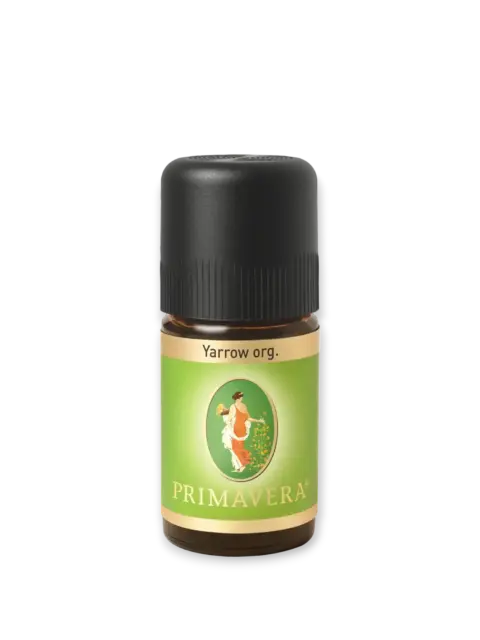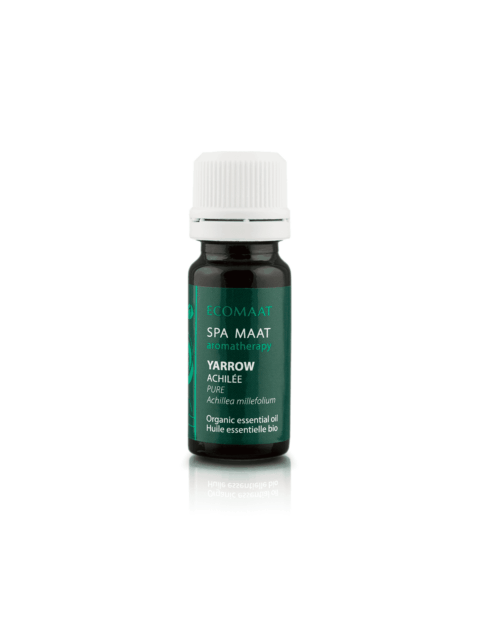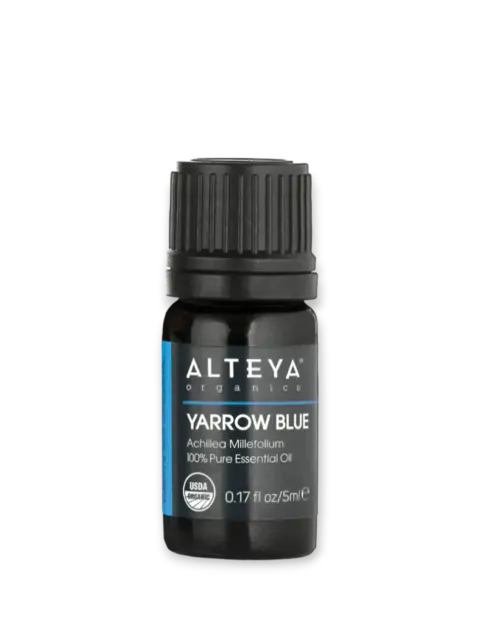

Yarrow essential oil is a dark blue color and is similar to German chamomile and blue tansy essential oils due to its content of chamazulene. Chamazulene is a sesquiterpene that exhibits anti-inflammatory and antispasmodic properties. It is sometimes known as blue yarrow essential oil.
One of the significant benefits of yarrow oil is its potential to regenerate the skin and calm the body and mind. The oil’s properties make it useful for days when you need to calm down or lift your spirits.
Many people find it helpful for meditative practices, aiding balance and stability during major life changes.

Harvest
Spring and early summer

Part of the plant
Leaves and flowers/buds

Extraction method
Steam distillation
Oil for comfort and courage
Yarrow has such a long and fascinating history. Its botanical name Achillea millefolium comes from the Greek myth of Achilles. It is also said that when the goddess Aphrodite was wounded in battle, she used yarrow to heal her wounds.
During World War I, it was used in soldiers' wound dressings to stop bleeding, aid healing, and prevent infection.
Today, yarrow essential oil is known for its ability to help heal damaged skin. It also promotes healthy immune system function and reduces the duration of seasonal illnesses. Emotionally, it is beneficial for harmonizing the mind and body, encouraging courage and increasing intuition.
| Botanical name Achillea millefolium | Aroma profile Tangy, grassy, fruity and slightly sweet |
| family Asteraceae | fragrance Middle note |
| Origin The temperate regions of the Northern Hemisphere in Asia, Europe and North America | application Reduces anxiety and increases self-esteem, has antibacterial, antifungal, hemostatic and anti-inflammatory properties |
It is essential to ensure sustainability when using essential oils , and yarrow is classified as “endangered” on the IUCN Red List of Threatened Species.
Main ingredients of yarrow essential oil
- Sabine
- Hamazulen
- V-mircen
- Germacrene D
- B-pinene
- Camphor
- Camphene

Application and effect
Yarrow essential oil is known for its many health and beauty benefits. This natural remedy is an indispensable assistant in the care of skin, hair and overall well-being. In the following text, we will look at eight main benefits and various uses of yarrow oil, along with important recommendations for safe use.
Anti-inflammatory properties
Yarrow oil is the first choice for various painful and inflammatory conditions. It is effective in treating skin problems including eczema, rashes, insect bites and burns. Yarrow's astringent properties make it ideal for dealing with acne as well as balancing oily skin and scalp.
In addition, the oil helps:
- Reduction of muscle spasms.
- Control of microbial activity.
- Dealing with fluid retention and allergic reactions.
Benefits for women's health
Yarrow oil can reduce excessive menstrual flow, regulate the menstrual cycle and is especially useful during menopause. Also, it can be applied as an aid in cystitis and vaginitis.
For healthy skin, hair and nails
Yarrow oil contains:
- Flavonoids: Possess antioxidant properties that protect the skin from oxidative stress, fight wrinkles and help even out the complexion. Cinnaroside, a specific flavonoid in the oil, soothes inflammation and reduces allergic reactions.
- Terpenes: These compounds have antimicrobial activity and are effective against bacterial and fungal infections. The monoterpenes and sesquiterpenes in yarrow have been shown to kill various types of microorganisms.
- Tannins: Help to strengthen the skin and nails through antioxidant and antifungal properties.
- Alkaloids: Reduce inflammation in skin conditions such as eczema and dermatitis. Achilein, a major alkaloid in yarrow, supports skin regeneration.
- Linoleic acid: Nourishes the skin and hair, stimulates hair growth and improves the barrier function of the skin.
- Sterols: Stimulate the production of collagen and help protect the skin from UV rays.
- Phenolic acids: Useful for treating psoriasis and rosacea through its anti-inflammatory properties.
- Lignans: Accelerate wound healing by stimulating skin regeneration.
For tired legs and varicose veins
Yarrow essential oil is an excellent choice for treating varicose veins, tired legs and feet. Its balancing properties make it suitable for combination with other oils to achieve an optimal effect.
| Mental Application: Nervous tension, insomnia, mild depressive states | Psychological action: Relaxing, balancing, highly stress-reducing |
| Physical Application: Eczema, open wounds and ulcers, menopause, premenstrual syndrome, painful menstruation, cramps, colic, gas | Physical action: Disinfecting, toning, temperature-lowering, pain-relieving and blood-stopping action. |
Recipes with yarrow essential oil

Aroma roll-on "Healing Assistant"
- 10 ml hemp seed base oil
- 2 drops yarrow
- 2 drops lavender
- 2 drops immortal
- 10 ml roller bottle

Mix all ingredients in a bowl. Using a funnel, carefully pour the mixture into a roll-on bottle. Apply to problem areas.
Joint pain relief lotion
- 120 ml olive oil and squalene
- 6 drops yarrow essential oil
- 4 drops rosemary
- 4 drops essential oil of myrrh
- 4 drops Roman chamomile
Combine all ingredients and stir until well blended. Apply the lotion to the problem areas.
Massage oil "Comfort"
- 120 ml jojoba oil
- 4 drops yarrow oil
- 6 drops manuka
- 4 drops lemon
- 4 drops cypress
Combine all ingredients and stir until well blended. Massage onto breasts.
Aroma blend "Courage" for inhaler
- 4 drops yarrow
- 4 drops bay leaf oil
- 4 drops oil from the leaves of the ho tree
- 3 drops fine lavender
- inhaler

In a personal inhaler, combine all essential oils. Inhale to give yourself courage.
Massage oil "Skin soothing"
- 120 ml hemp seed oil
- 6 drops yarrow
- 6 drops juniper berries
- 6 drops palmarosis

Mix the carrier oil with the essential oils and stir well. Massage onto the problem areas.
Aroma blend "Intuition"
- 2 drops yarrow
- 2 drops Gradinsky Chai
- 2 drops jasmine sambac
- 2 drops grapefruit
Drop all the essential oils into a diffuser and enjoy!
Yarrow essential oil safety information
Tisserand and Young recommend caution when using yarrow essential oil, especially if you are taking medications that are processed by CYP2D6 (one of the most important metabolic enzymes that metabolize drugs). Neurotoxicity is possible and a maximum dermal dose of 8,6% is recommended. It is extremely important to read the full profile for comprehensive safety guidelines for using this oil.
In addition to yarrow essential oil, a CO2 extract is also available. However, care must be taken as the safety precautions of CO2 extracts may differ from those of their essential oils.
- For external use only
- Do not use on skin prone to allergies
- Not suitable for people with epilepsy
- Do not use undiluted on skin
- Avoid contact with sensitive areas such as eyes
- Not recommended for children under 5 or during pregnancy
Contains naturally occurring allergens: Limonene, Linalool
More interesting articles from the blog
- German Chamomile Essential Oil – Benefits and Uses
- Immortelle – the herb of the Mediterranean
- Rosemary essential oil – benefits and uses
- Myrrh Oil – The Mysteries of Antiquity
- Essential oils – uses and benefits in aromatherapy