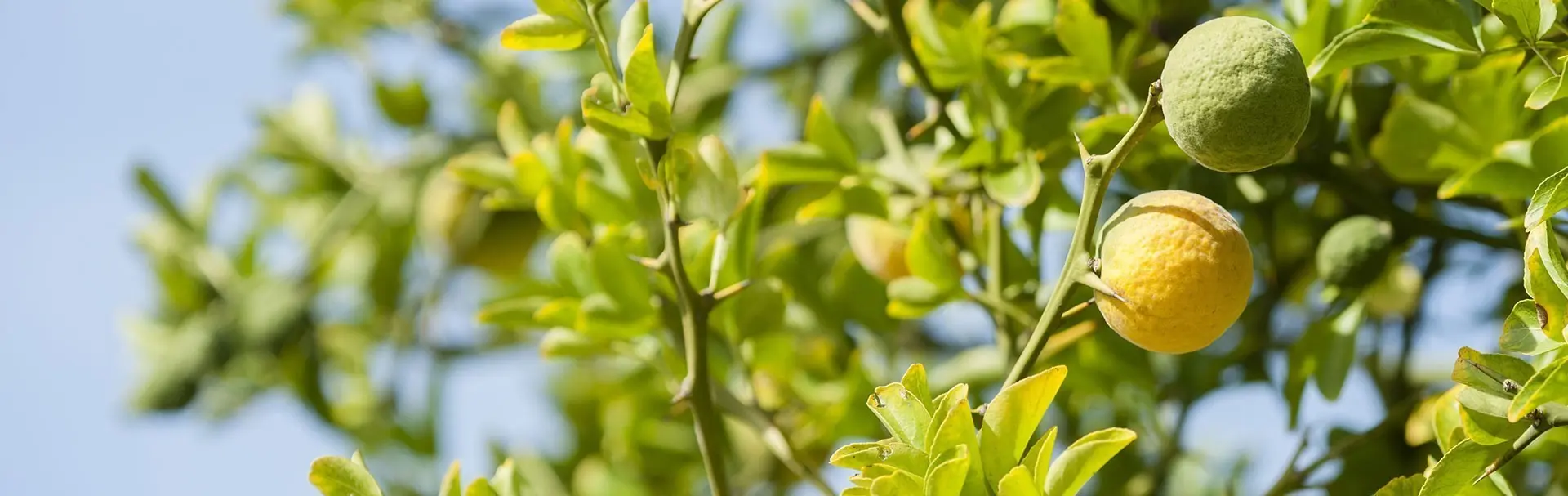
Tea tree essential oil is one of those must-have oils in your home aromatherapy collection. Its fresh, camphoraceous scent is reminiscent of medicine, but many people become fond of it (or at least tolerant) once they get used to it.
Tea tree oil is one of the most commonly used essential oils and has great healing properties. It has antibacterial action with a wide spectrum of action - antiviral, antiparasitic, anti-inflammatory, cleanses, heals and tones the hair and scalp, stimulates the immune system, soothes stress and anxiety.
Quick Pick: Tea Tree Essential Oil & Organic Products
Looking for pure tea tree oil or ready-made organic products? Buy directly with a guarantee of organic quality:
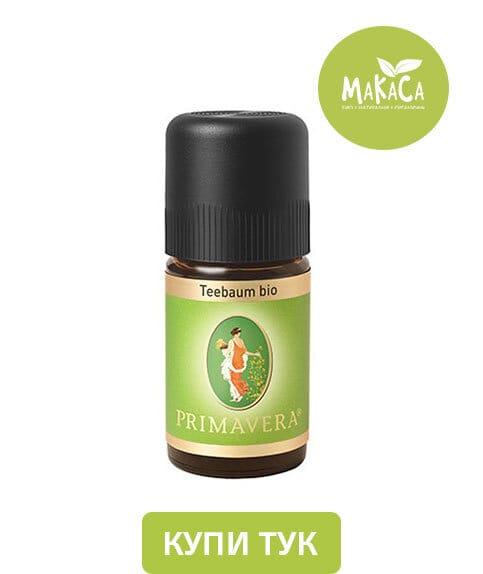
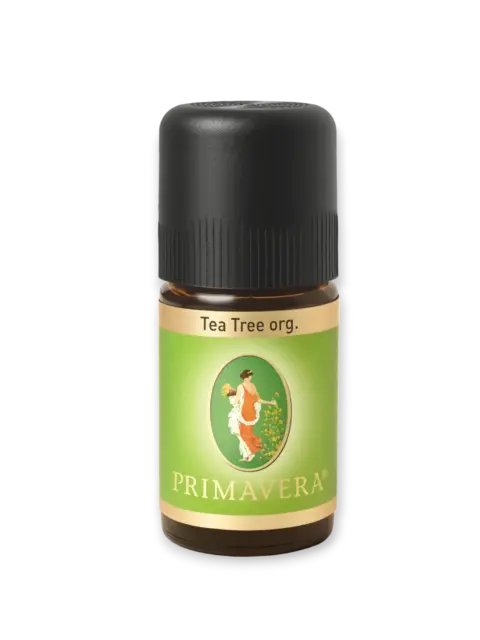
- Buy Tea Tree Essential Oil (Primavera Bio 5 ml) – 100% pure organic oil
- Buy Greenatural Mosquito Repellent Lotion (100 ml) – organic repellent with essential oils
- Buy organic almond oil (Alteya Organics) – base oil for massage and dilution
- Buy Organic Mint Floral Water (Primavera 100 ml) – refreshing hydrosol

HARVEST
Spring and fall, every second or third year

PART OF THE PLANT
The branches and leaves

METHOD OF EXTRACTION
Steam distillation
A brief history and interesting facts about tea tree oil
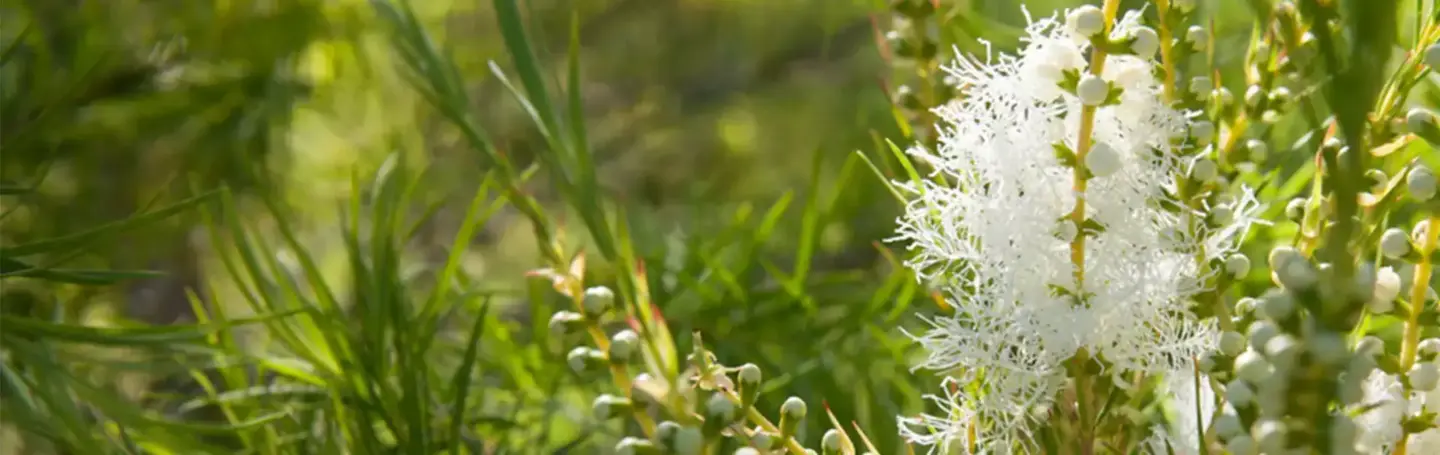
Its botanical name is Melaleuca alternifolia and it is extracted from the leaves of the tree by steam distillation. It is native to southeastern Queensland and the northeastern coast of New South Wales, Australia. Other species are cultivated elsewhere in the world, but Melaleuca alternifolia is produced exclusively in Australia.
Tea tree is the common name for a group of plants in the melaleuca family, including the cajaput ( Melaleuca cajeputi ) and the niaouli ( Melaleuca viridiflora ), among many others. It has needle-like leaves similar to cypress and flowers that are yellow or purple. It grows up to 7 meters tall and prefers swampy areas. The tree is cut down, but in just two years it grows back and is ready for new pruning.
Tea tree oil has been used as a traditional medicine by Aboriginal people in Australia for centuries. These Australian aborigines crush the leaves of the tea tree to extract the oil, then inhale it to treat coughs and colds or apply it directly to the skin for healing.
Captain Cook gave this name to the plant when he discovered the coast of Australia in 1770 and his sailors started making tea with its leaves.
The botanist of the expedition, Joseph Banks, brought the plant to England.
The numerous properties of the tea tree did not go unnoticed by the aborigines - they used it to treat a variety of ailments - colds, high fevers, cuts and various injuries. To obtain the essence, they crushed the leaves and made inhalations and tea with the resulting mixture.
Tea tree oil , like niaouli, camphor tree or thyme , is a first-rate antiseptic.
During World War II, each soldier was given a small amount of tea tree essential oil to help fight infected wounds on the battlefield.
Oil contains many different chemical compounds and its composition changes if exposed to air, so it should always be tightly sealed to slow down the oxidation process.
Tea tree oil contains a number of compounds, including terpinen-4-ol, which have been shown to kill certain bacteria, viruses, and fungi (according to two studies [1] , [2] ).
Terpinen-4-ol also appears to increase the activity of white blood cells, which help fight germs and other foreign invaders ( [3] ).
These anti-microbial properties make tea tree oil a valuable natural remedy for treating bacterial and fungal skin conditions, preventing infections, and promoting health.
| Botanical name Melaleuca alternifolia | Aroma Profile Fresh, grassy, spicy |
| family Myrtaceae (myrtaceae) | fragrance Middle note |
| Origin Australia | application It cares for skin with spots, has a clarifying effect on acne, a refreshing component in oral hygiene |
Uses and properties of tea tree essential oil
Tea tree essential oil has a rich history of use - a wonderful wound healing agent, it is successfully used as a natural topical antiseptic for burns and cuts, as well as for treating a wide range of bacterial and fungal infections (including athlete's foot).
Other conditions that tea tree essential oil helps and relieves are:
- Fungal infections;
- stuffy nose and respiratory infections;
- insect bites, skin inflammations and irritations, any skin infections;
- infections of the oral cavity - abscess, gingivitis, aphthae;
- infections of the upper respiratory tract - otitis, sinusitis, angina, rhinopharyngitis;
- skin infections - juvenile acne, eczema, herpes, psoriasis.
You can add tea tree essential oil to your favorite carrier oil and use it for massage, as a compress for injuries, for inhalation or rubbing. Diffusing it relieves depression, exhaustion and nervousness.
According to Eastern spiritual currents, it soothes the nervous system and stimulates the flow of “Chi” energy. It energizes all chakras and clears stagnant energy in the body.
Hand sanitizer
Tea tree oil is an ideal natural hand sanitizer. Studies have shown that it kills several common disease-causing bacteria and viruses, including E. coli , S. pneumoniae , and H. influenzae.
Insect repellent
Tea tree oil can help keep annoying insects at bay. Studies have confirmed that tea tree oil has a high ability to naturally repel mosquitoes and other insects.
Recipes with tea tree essential oil
Anti-acne face mask
- 1 soup. a spoonful of honey
- 1 soup. spoon of apple cider vinegar
- 2 tablespoons yellow clay
- 4 drops frankincense essential oil
- 4 drops chamomile essential oil
- 4 drops tea tree essential oil

Mix all ingredients in a small bowl, mix thoroughly. Apply the mixture to clean skin with a suitable soft-bristled brush. Leave for 15 to 20 minutes and rinse with warm water. Pat dry and apply a suitable moisturizer or facial oil. You can apply the mask once a week. If there is any mixture left, do not reuse it.
Hand sanitizer spray
- 30 ml of alcohol (e.g. vodka)
- 30 ml organic almond oil
- 30 ml of distilled water
- 10 drops lavender essential oil
- 6 drops lemon essential oil
- 5 drops tea tree essential oil

Pour the alcohol and essential oils into an empty spray bottle. Add almond oil and fill with water. Shake well before use, spray on palms and rub.
Clarifying facial mask
- 3 tablespoons of medicinal clay
- 3-4 tbsp. mint water
- 1 drop organic tea tree
Add the essential oil and plant water to the healing clay and mix until you get a creamy paste. If the paste is too dry, add a little vegetable water and mix well again.
Tea Tree Citrus Bathroom Cleaner
- 2 tablespoons liquid soap
- 2 tablespoons of baking soda
- 10 drops tea tree essential oil
- 10 drops lemon essential oil
- 500 ml of hot water
Mix all ingredients in a spray bottle. Shake well and use to clean and disinfect bathroom surfaces.
Conclusion
The information in this article is for educational purposes only and is not intended to serve as a basis for prevention or treatment! It is important to seek professional advice and carefully follow the instructions listed on the packaging of the products you purchase. When storing essential oils , it is important to be aware that light, heat, and oxygen can affect the integrity of the oil.
More interesting articles from the blog
- Thyme essential oil – benefits and uses
- Kayaput Essential Oil – Benefits and Uses
- Oregano oil – for respiratory problems
- Lavender – the essential oil of antiquity
- Lemon essential oil – health benefits
Categories
10.90 €Add to cart

6.90 €Add to cart
4.65 €Add to cart
Price range: €4.55 through €19.50Options This product has multiple variants. The options may be chosen on the product page
19.90 €Add to cart
4.15 €Add to cart
5.75 €Add to cart

4.85 €Add to cart
4.70 €Add to cart
4.35 €Add to cart
5.05 €Add to cart