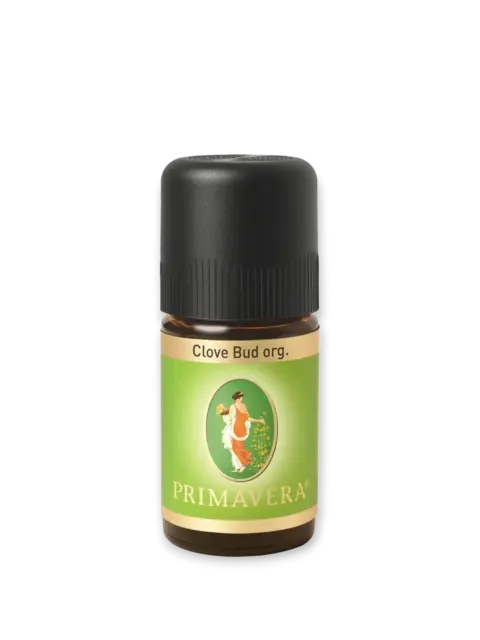

Clove essential oil is extracted from the clove tree Syzygium aromaticum , which grows primarily in Southeast Asia. It is produced by distillation of the tree's dried flower buds. Other parts of the tree, such as the stem or leaves, can also be used to produce clove essential oil.
In short
- Clove essential oil (Syzygium aromaticum) is extracted primarily from the flower buds.
- Its aroma (eugenol) is associated with invigoration and traditional topical applications.
- Strong oil: always dilute strongly; do not experiment on children without clear guidance.
The eugenol contained in the essential oil is also used in dental anesthesia, and sometimes its aroma reminds us of the dentist's office. Clove essential oil facilitates digestion, fights bacterial digestive infections and helps relieve physical and mental fatigue. Its aroma also has the property of overcoming the feeling of hunger.
Contents
What are the benefits of clove essential oil?
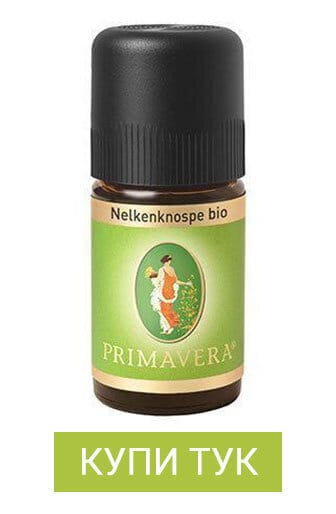
- Clove essential oil helps with toothache.
- Natural anti-inflammatory agent, reduces pain.
- It has broad-spectrum antimicrobial and cleansing properties.
- Relieves respiratory ailments.
A brief history of clove essential oil
The history of the spread of this plant is quite interesting. It is believed that the Chinese knew about it as early as the 3rd century BC. The Portuguese planted this plant in the Moluccas and achieved a monopoly in the trade in this type of spice for almost 100 years.
From the 17th to the early 19th centuries, cloves were shipped to Europe. Competition led to naval battles between the Portuguese, Spanish, Dutch, and English.
The great French navigator Poivre, after enormous difficulties, managed to steal the plant from the Moluccas and transport it to the islands of Bourbon (now Reunion) and Mauritius, of which he was governor.
This is how the clove plantations arose.
The clove tree Syzygium aromaticum is an evergreen species belonging to the Myrtaceae family , which reaches over 10 meters in height. The buds of the clove are hand-picked before they bloom - this is how the spice clove is obtained. When dried, they have a dark brown color, a strong pleasant aroma and a pungent, spicy taste.
The spice is a popular ingredient in Christmas cookies and other dishes. When dried, it resembles the shape of a clove flower, hence the plant's name.
The spice contains a record amount of aromatic oil, which reaches 20%.
The essential oil is rich in plant phenylpropanoids, with the main compound being eugenol. Other bioactive compounds may include thymol, carvacrol, and cinnamaldehyde. The color of clove essential oil can range from pale yellow to golden brown, and its aroma is strongly spicy, smoky, similar to the spice clove.

Health benefits of using clove oil
Before we get into the numerous health benefits of using clove oil, it is important to emphasize that the essential oil is a so-called "hot oil" - meaning it needs to be diluted heavily as it can cause skin sensitivity.
When using it topically, it should always be used diluted in a base oil and with special care by people with more sensitive skin, as it can cause an allergic reaction.
Helps relieve toothache pain
Perhaps one of the most popular and traditional uses of this oil is to relieve toothache or gum pain. Eugenol, which is one of the main chemical components of cloves, can act as a natural anesthetic when applied topically.
Although clove oil will not be able to remove your existing cavity or abscess and cannot treat the root cause of your dental problems, it can work wonders and relieve pain if you need to wait until it's time for your dentist appointment.
To do this, it is best to dilute the essential oil with a base vegetable oil (such as olive oil) and apply it to the problem area.
It has strong antibacterial, antifungal and antimicrobial properties
Thanks to its antimicrobial properties, clove essential oil can be used to prevent infections. It is useful for wounds, cuts, fungal infections, bruises, and other types of injuries.
The use of clove essential oil also relieves insect bites and stings.
Clove oil may have strong antibacterial and antifungal properties. Due to its chemical composition, it can inhibit the growth of mold, yeast, and bacteria. Various studies have shown that the phenolic compounds in the oil can kill several gram-negative and gram-positive bacteria.
It can boost the immune system
Both cloves and clove oil can be helpful in boosting the immune system. Its potential antiviral properties can help boost resistance to a host of diseases, possibly because the antioxidants in clove essential oil cleanse the body of dangerous free radicals.
Rich in antioxidants
The eugenol in this oil is a powerful antioxidant with high free radical scavenging activity. It may have some antioxidant properties and ranks high in ORAC (oxygen radical absorbance capacity) value, meaning that using it in small amounts or applying it to the skin may reduce oxidative stress and prevent chronic diseases.
Uses of clove essential oil
- Insect repellent: It is used as an ingredient in insect repellents or candles, as its scent repels mosquitoes and other pests.
- Cosmetic/topical use: can be used as a massage oil. Due to its strong aroma, soothing effect and antiseptic properties, clove oil is often added as an active ingredient in soaps and other cosmetic products. Add a maximum of 5 drops to 50 ml of organic almond base oil and massage for muscle pain.
- Aromatherapy: Clove oil goes well with many things. essential oils basil, rosemary (see also our article about rosemary), rose, cinnamon, grapefruit, lemon, nutmeg, peppermint (see our article about mint), orange, lavender and geranium. Diffuse in your favorite aroma diffuserto enjoy its soft, spicy aroma.
Safety tips and potential side effects
Clove oil can cause a strong burning sensation if used in concentrated amounts on the skin. It is recommended to always apply small amounts of essential oil, previously diluted in a carrier oil – such as almond , jojoba or argan oil . It is not recommended for use on children.
Side effects of clove oil
- Allergic and toxic effects: Excessive dosage may cause allergic reactions or toxic effects due to the eugenol content.
- Intestinal problems: may cause intestinal discomfort, mainly in children.
- Blood sugar levels: This oil can cause blood sugar to drop.
- Blood clotting disorders: People with bleeding disorders (e.g. hemophilia) or those taking blood-thinning medications should avoid this oil.
Pregnant women and those who are breastfeeding should not use clove oil, as it is not clear whether this potent compound passes into breast milk. Additionally, patients should stop taking the oil before surgery or a dental procedure, as it may increase the risk of bleeding.
As with any dietary change or dietary supplement, it is best to consult a doctor before implementing or adding it to your regimen.
Frequently Asked Questions
What is clove essential oil used for?
In aromatherapy, it is valued for its warm, spicy aroma and comfort. You can find it in the store: Primavera Clove Essential Oil.
How is clove oil applied?
Only highly diluted in a carrier oil or in a diffuser (a few drops). Do not apply neat to skin or gums.
Is clove oil safe for toothache?
Home use is not a substitute for dental care. Eugenol irritates mucous membranes—do not drop undiluted oil into your mouth.
Conclusion
The information in this article is for educational purposes only and is not intended to serve as a basis for prevention or treatment! The International Federation of Professional Aromatherapists (IFPA) does not recommend that essential oils be taken internally unless the application is under the supervision of a physician qualified in clinical aromatherapy! Like medications, essential oils should be treated with respect. It is important to seek professional advice and carefully follow the instructions listed on the packaging of the products you purchase.
Author: Kremena Petrova
Sources
Wikipedia, www.aromaweb.com
https://pubmed.ncbi.nlm.nih.gov/21796701/
https://sfamjournals.onlinelibrary.wiley.com/doi/10.1111/j.1365-2672.1989.tb02456.x
https://www.ncbi.nlm.nih.gov/pmc/articles/PMC3769004/
More interesting articles from the blog
- Ginger essential oil – health benefits
- Oregano oil – for respiratory problems
- Rosemary essential oil – benefits and uses
- Thyme essential oil – benefits and uses
- Black pepper essential oil – benefits and uses