
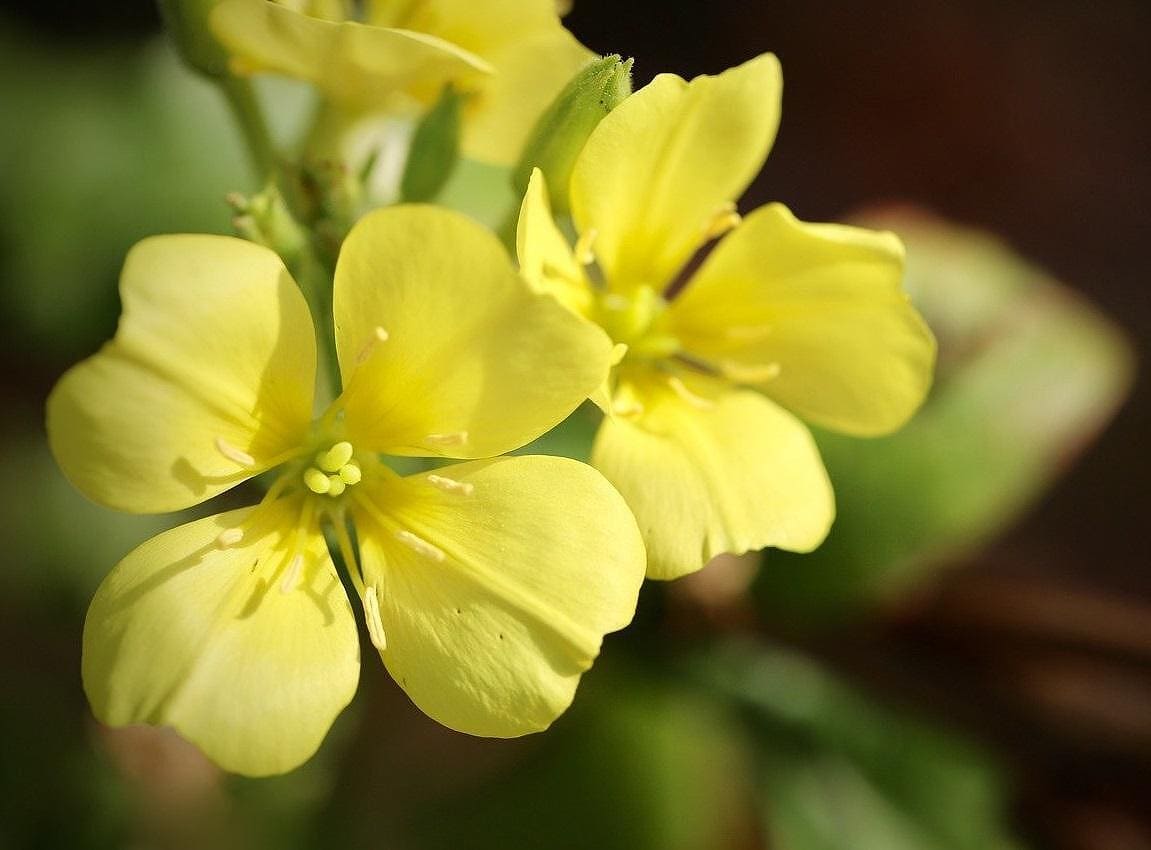
Evening primrose oil is cold pressed from the seeds of the Oenothera biennis plant.
It is traditionally called the “royal medicine” due to the belief that its “majestic” benefits and “honorary” properties make it fit for kings and queens.
Used cosmetically or topically, it soothes and moisturizes the skin, scalp and hair, while increasing their elasticity. It also promotes a healthy, clear and rejuvenated complexion with improved radiance and addresses rough skin, wrinkles, redness, dryness and irritation. It facilitates the healing process, reduces the appearance of scars and soothes inflammation.
Used medicinally, evening primrose oil has a reputation for relieving headaches, dizziness, muscle pain and weakness, fatigue and slowed reflexes, as well as irritability. It is believed to promote clarity of mind, determination and concentration, while improving coordination, appetite, immunity, memory, sensuality and vigor.

Harvest
Late summer

Part of the plant
The seeds

Extraction method
Cold pressing
History of the use of evening primrose oil
Evening Primrose Oil is regal and noble enough to be used by kings and queens, and is known as the “royal medicine.” In the past, various parts of the Evening Primrose plant, such as the seeds, fresh flowers, leaves, and roots, as well as the essential fatty acid, were used to treat symptoms of acne, asthma, diabetes, eczema, fatigue, loss of libido and impotence, menstruation and menopause, polycystic ovary syndrome, poor memory, and rheumatism.
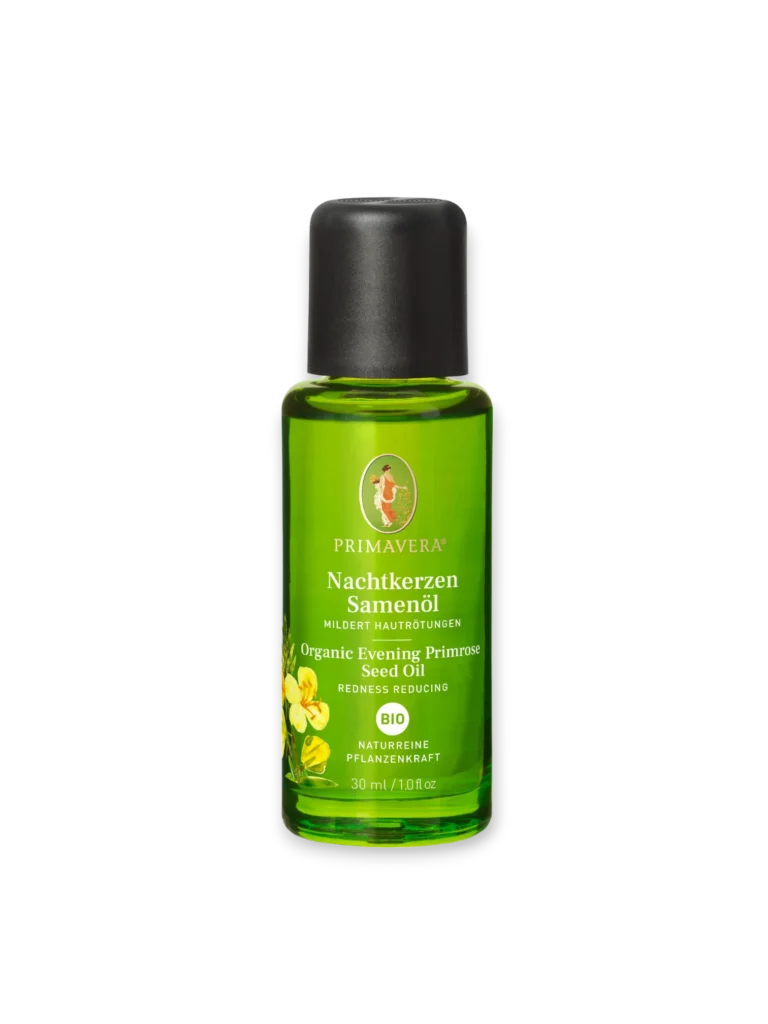
In Ayurveda and traditional Chinese medicine, the therapeutic properties of the plant and its oil are used to regulate and address problems related to circulation, inflammation, the female reproductive system, the respiratory system, and the nervous system.
Among various Native American groups and early American settler communities, various parts of the evening primrose were used to make infusions, poultices, and topical pastes intended to treat bruises, wounds, and obesity. For some tribes, the roots of the plant were even part of their staple diet. Its benefits were also used to aid in nutrition and nourishment, as well as to soothe ailments such as sore throats, stomach aches, gastrointestinal problems, and hemorrhoids.

Benefits of evening primrose oil
The main chemical constituents of evening primrose oil are: linoleic acid (Omega-6), γ-linolenic acid (Omega-6), oleic acid (Omega-9), palmitic acid, and stearic acid.
Used cosmetically or topically, evening primrose oil has soothing and moisturizing properties and is gentle enough for use on sensitive and prematurely aging skin. It is reputed to not only moisturize but also improve the elasticity and texture of flaky skin, making it an ideal ingredient in mature skin formulas.
With astringent and emollient properties, it helps to reveal a healthy, clear and rejuvenated complexion with improved radiance. By addressing roughness, wrinkles, redness, dryness and irritation, it has a reputation for soothing skin affected by acne, eczema and psoriasis.
When used on hair, it is known to hydrate and nourish the scalp, strengthen hair follicles, and soothe itching, dryness, and inflammation, thereby preventing or reducing hair loss.
Application and action
| Physical Application: Relieves headache, dizziness, muscle pain and weakness, fatigue, slowed reflexes, irritability, reduction of scarring, to soothe inflammation associated with topical allergies, eczema and psoriasis | Physical action: Anti-inflammatory, antioxidant, cleansing, nourishing, astringent, analgesic, stimulant, antidepressant, sedative, expectorant, antihistaminic, anticoagulant, immunostimulant, antispasmodic |
Uses of evening primrose oil
Used in cosmetics and topically, evening primrose oil can be applied directly to the skin to hydrate and prevent acne. To speed up the healing process, simply dab 2–3 drops of evening primrose oil on pimples to help them heal.
It is an ideal moisturizer that improves skin health, leaving it fresh and rejuvenated. For a moisturizer that soothes redness, inflammation, and itching, combine evening primrose oil with equal parts shea butter and apply the mixture to your skin at night before bed. This natural moisturizer is known for nourishing the skin with essential oils, thus soothing and clarifying the complexion, while promoting its softness.
Recipes with evening primrose oil

Moisturizing oil for dry and sensitive skin
- 5 ml evening primrose oil
- 5 ml jojoba oil
- 20 ml apricot kernel oil
- 2 drops Roman chamomile essential oil
- 2 drops neroli essential oil
- 2 drops pink absolute
- 5 drops lavender essential oil
- 4 drops sandalwood essential oil

Using your fingertips, massage this mixture onto your face and neck and leave it on for 20 minutes. Wipe off excess oil with a tissue. This hydrating oil can be used 3 times a week after cleansing the face and neck, preferably in the evening.
Natural oil for mature skin
- 12 ml evening primrose oil
- 20 ml avocado oil
- 16 ml rice bran oil
- 2 ml liquid vitamin E
- 4 drops neroli essential oil
- 4 drops incense oil
Regular application of this moisturizing facial oil is known to help tighten the skin, thereby reducing the appearance of wrinkles and fine lines.
Night serum for face
- 2 tbsp. avocado oil
- 1 tbsp. pomegranate seed oil
- 2 tbsp. evening primrose oil
- 10 drops frankincense essential oil
For a formula that can be applied as a nighttime facial serum to nourish, soften, and smooth skin, pour the oils into a dark glass dropper bottle and shake well to mix. Apply in the evening to cleansed face and damp skin.
Body oil for sore feet and cracked heels
- 5 ml evening primrose oil
- 5 ml neem oil
- 5 ml avocado oil
- 50 ml aloe vera oil
- 10 drops lavender essential oil
- 7 drops tea tree essential oil
- 5 drops benzoin resin
- 5 drops essential oil of myrrh
- 3 drops peppermint essential oil
For a soothing balm for sore feet and cracked heels, combine all the oils in a small bowl and mix well. This balm can be applied to well-dried feet after they have been washed in a bath or shower. It is highly recommended that the feet be carefully buffed first to remove dead skin, as this will prevent existing cracks from getting worse.
More interesting articles from the blog
- Castor oil – benefits and uses
- Jojoba oil – benefits and uses for skin and hair
- Calendula oil – benefits and uses
- Avocado oil – benefits and uses
- Neem oil – benefits and uses
Categories
- Aromatherapy
- Essential oils
- Carrier oils
- Diffusion methods
- Natural cosmetics
- Recipes with essential oils
- News
Conclusion

The information in this article is for educational purposes only and is not intended to serve as a basis for prevention or treatment.
- https://en.wikipedia.org/wiki/Oenothera
- https://www.newdirectionsaromatics.com/blog/products/all-about-evening-primrose-oil.html
- https://www.primaveralife.com/nachtkerzenoel-bio.html#tipps
- Valerie Ann Worwood, The Complete Book of Essential Oils and Aromatherapy
Photos: Primavera Life
14.90 €Add to cart
7.85 €Add to cart
10.20 €Add to cart
 Discount: -20%
Original price was: €17.90.14.32 €The current price is: €14.32.Add to cart
21.90 €Add to cart
 Discount: -20%
Original price was: €10.90.8.72 €The current price is: €8.72.Add to cart
10.20 €Add to cart


