Combining essential oils is an extremely creative activity, which can sometimes be guided by your intuition. The skill of mixing essential oils is an extremely useful and enjoyable activity. Although the number of essential oils and possible combinations seems overwhelming, with the help of a little theory, precision, intuition and a dose of creativity, creating your own blends is a completely achievable goal.
Specific classifications divide oils into different groups based on their individual characteristics. Essential oils are categorized by the aromatic family they belong to – floral, woody, herbal, spicy; by their rate of evaporation – so-called top, middle or base notes; and by their therapeutic properties – calming, energizing, etc. The skills and feel needed to create balanced and harmonious blends can be developed and honed, and this article will help you achieve this.
Whether your ultimate goal is to overcome a specific condition or create an irresistible aroma, this guide will introduce you to both the theory and practice of essential oil blending.
Part 1: Essential Oil Blending Theory

Why mix them at all?
Essential oils are volatile aromatic essences extracted from various plants that are complex in their own right. This complexity not only shapes the unique aromas they emit and the properties they exhibit, but is also the reason for the interesting results seen when mixing two or more essential oils.
In simple terms, when essential oils interact with each other, they can exhibit properties and effects that cannot be attributed to any one of them individually. In aromatherapy, this phenomenon is known as “ synergy .” Synergy is the idea that essential oils are generally more powerful when combined than when they act alone. Like musical notes that together create a captivating melody, blending certain essential oils can release enticing aromas and have therapeutic effects that may be different from the individual characteristics of each oil.
Classification of essential oils
Throughout their history, essential oils have been grouped and classified in countless different ways. This grouping gives us the answer to the question: Which essential oils combine well? Mixing incompatible oils can not only result in unpleasant aromas, but can even reduce their therapeutic effect.
Achieving a perfectly balanced and harmonious combination, on the other hand, can have a powerful therapeutic effect combined with a pleasantly balanced aroma. There are three main techniques (or models) for classifying essential oils, which are also the most popular in aromatherapy.
- Classification based on the aromatic family
In perfumery, fragrances are often described and depicted using colors or the so-called. "aromatic wheels". These frameworks, such as the popular one developed by English historian Michael Edwards, attempt to group different fragrances into "families" based on their unique nature and olfactory sensation.
The same can be applied to essential oils. In the table below, you can familiarize yourself with the classification of essential oils according to the type of their aromatic family.

An easy way to blend using this pattern is to choose essential oils from the same family. Because the chemical identity of these oils is close, they are expected to be compatible with each other.
Another technique is to select essential oils from two families that are known to mix effectively. These relationships are also listed in the table above, for example, you can expect good results when mixing peppermint, which is a peppermint essential oil, with a citrus such as grapefruit, or with a woody oil such as pine or cedar.
- Classification based on evaporation rate
This technique categorizes essential oils using an analogy to the musical scale. In the 17th century, Septimus Peace, an English perfumer, suggested that there was a similarity in the way people perceive sounds and smells. A major chord, for example, consists of a root note, a major third, and a perfect fifth. When these three precise tones come together in harmony, the human brain registers a pleasant, balanced sound.
But can essential oil fragrances work in the same way?
It was eventually revealed that Septimus Peace’s theory made sense. Today, the perfume industry and essential oil manufacturers divide them into three main “notes,” each of which depicts a distinctive quality and speed of evaporation of the oil. The top notes include oils that have a low molecular weight and therefore reach the olfactory receptors first when inhaled. They also evaporate quite quickly, which allows the fragrance to develop and make the other notes much more noticeable. The evaporation rate of the middle note is not as high as that of the top note, but it is still faster than the base note. This middle note acts as a connecting bridge between the lighter and heavier oils, bringing a sense of harmony, richness, and balance. The base notes refer to the oils with the highest molecular weight and, as a result, evaporate the slowest. It also retains or fixes the other elements of the blend and makes the scent more lasting.

Using the theories of perfumery, we can create fragrances or blends that have the desired characteristics. For example, by choosing oils from the three perfume categories, we can create a more complex and balanced blend that unfolds over time. Conversely, choosing oils from the same perfume note can result in a more homogenous blend with uniform aroma and action.
- Classification based on therapeutic properties
Aside from their alluring and exotic scents, essential oils are also well known for their therapeutic properties. For example, oils such as lavender, ylang-ylang are believed to have exceptional sedative properties that can relieve anxiety and promote sleep and relaxation. Oils such as lemon, sweet orange and peppermint have a stimulating effect, energizing and enlivening the atmosphere. For those looking to make their own therapeutic blend, it will be helpful to know how essential oils can be grouped according to their beneficial properties.

This grouping will make it easier to choose essential oils for your personal blend according to the specific needs you have.
For example, to create a blend with a calming effect , you can choose oils that relax or improve mood, such as bergamot, and avoid those that stimulate and energize, such as ginger and grapefruit.
If you want to make a massage blend that will help you relax and create a sensual atmosphere, you can use oils from the aphrodisiac group, such as clary sage or sandalwood.
Which model/technique should I choose for my blend?
It is often said that blending essential oils is as much art as science. And this is very true!
Each model is just a guide and which one you use depends on your tastes and preferences. If you like a certain classification more than others, you can select it. The different models can also be combined, for example you can choose a top, middle and base note, all belonging to the same family or having similar therapeutic properties.
You'll find that different reference books, charts, and books offer variations when it comes to grouping. This is due to the complexity and subjective evaluation that is in the very nature of essential oils and sometimes it is difficult to place them in just one category.
Thus, some oils can be classified as both base and middle notes (black pepper oil is an example) and others can be both calming and stimulating to the mind (like lemon oil).
Part 2: Essential Oil Blending Practice

In the following lines, you will find a six-step guide to help you create your own aromatic or therapeutic blend.
Step 1: Understanding and realizing the importance of safety
Creatively mixing essential oils is a very enjoyable and fascinating activity and it can be easy to forget that these natural volatile oils can cause harm if used incorrectly.
Be careful not to spill them, as pure, undiluted oils can cause irritation if they come into contact with the skin, and can also potentially damage or stain certain materials and surfaces such as rubber, carpets, furniture or clothing. Essential oils can irritate the mucous membranes of the eyes, so try to keep a safe distance when mixing and keep bottles tightly closed when not in use. Information regarding the safety of different essential oils can vary, but it is extremely important to do your own research before using any oil. Always read the label on the bottle.
Step 2: Order or collect the equipment you need
The basic equipment you need for mixing includes:
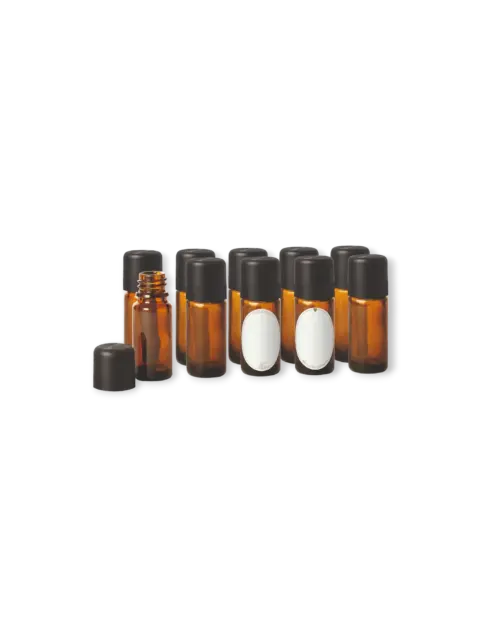
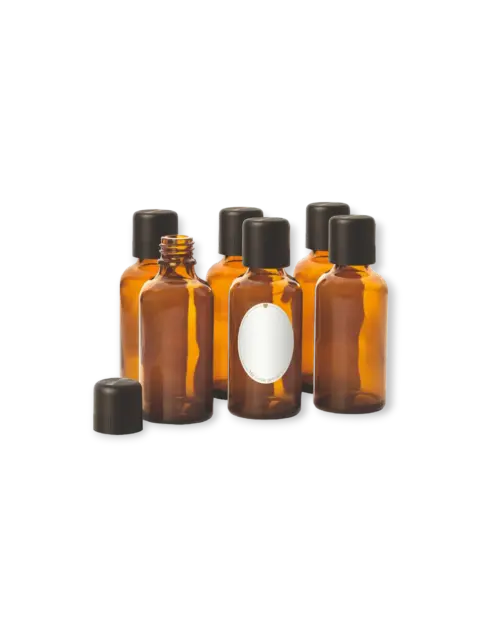
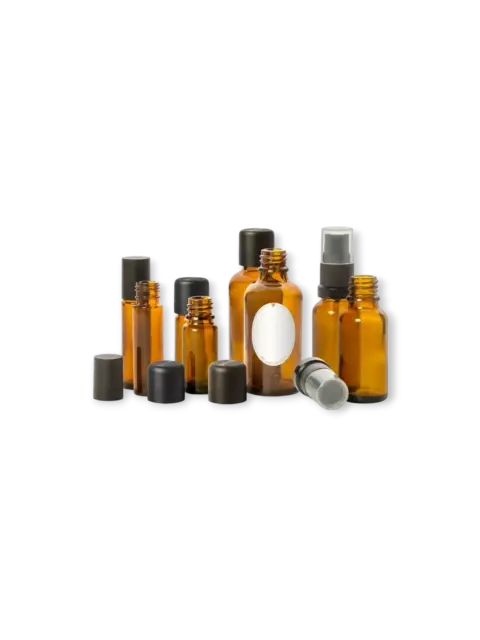
- Amber or dark blue glass bottles in preferred sizes from 2 ml to 60 ml.
- Glass droppers.
- Paper strips for testing the scent (like those in perfumeries, you can cut from thicker paper).
- Labeling tape or suitable stickers.
- Label marker.
Remember that pure essential oils should not be stored in plastic bottles and can also damage rubber and wooden surfaces. Glass droppers are available and it is a good idea to use a separate one for each oil to prevent contamination.
Step 3: Selection of essential oils
Using the theories outlined in Part 1, you can now choose which oils to include in your blend. Note that there is no single way to use all categorizations and they can be combined to meet specific needs. You can consult a trusted reference book or spreadsheet as you come up with ideas. This step is a very creative process, so you shouldn't be afraid to explore different possibilities and combinations while using your imagination to achieve the desired result. The number of selected essential oils can always be narrowed down afterwards.
Step 4: Get oriented
Getting to know each essential oil individually is an important preliminary step before you start blending. The olfactory experience can be highly memorable.
When you inhale the aroma of the essential oil, its molecules quickly travel to the olfactory receptors in the nasal cavity. Here, information is registered and sent to the brain, including a structure known as the limbic system. The limbic system is responsible for regulating emotions and memories. This is why scents can evoke a strong emotional experience. The best way to experience the scent of an essential oil is to put a drop or two on a perfume tester strip. Then wave the band in front of you and then inhale. You can write down the first words that come to your mind.
- What is my initial reaction to this fragrance?
- Is it positive, negative or neutral?
- What words would I use to describe it?
- How strong or intense is this scent?
- How did you make me feel? Calm, balanced, energized?
- Does this fragrance remind me of anything? A flower, object or even a specific memory?
Then take a short break before inhaling the next oil. This is to prevent olfactory fatigue, which can sometimes have a negative effect when overloaded with many scents at once. Through this process, you can narrow down the choices to create a harmonious custom blend. A blend of three oils is recommended for beginners. To get an idea of the end result without wasting oils, you can place two drops on individual test strips, wave them in front of you, and then inhale.
Step 5: Create your unique blend
You should now have a clear idea of exactly which oils will be included in your blend. The next step involves a little experimentation to find the ideal proportions needed to produce a balanced mixture.
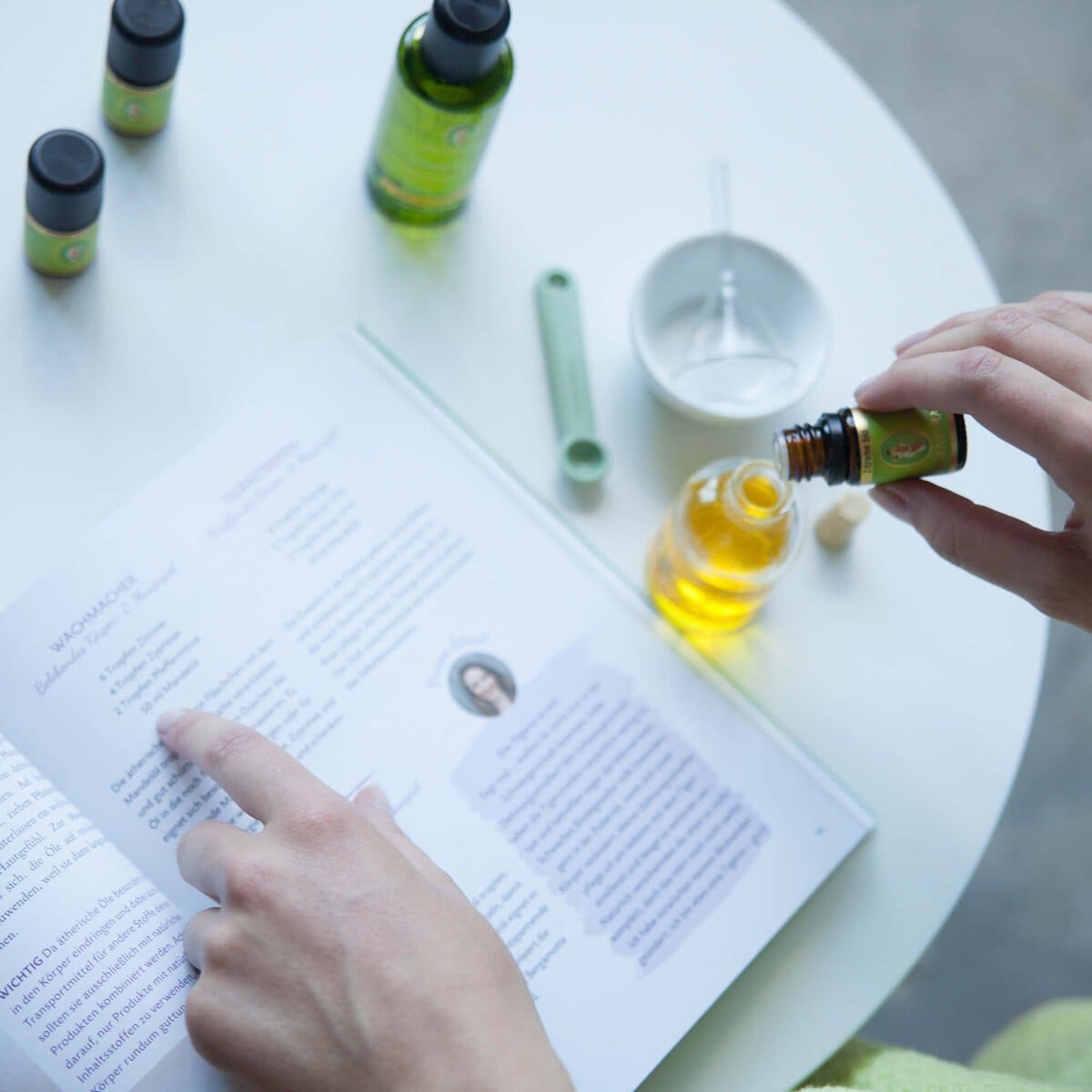
You might try a 1:1:1 ratio initially. Another popular ratio is 3:5:2, which refers to the top, middle, and base notes respectively. So for example, if you decide to use the second option and you want your mixture to consist of a total of 20 drops, you would mix 6 drops of oil from the top note group, 10 drops of the middle note and finally 4 drops of the base. Add your oils drop by drop into a glass bottle, guided not only by your preferred ratio, but also by your intuition and olfactory receptors.
Sometimes you'll want to add "just a drop" and to avoid this it's a good idea to take short breaks to prevent olfactory fatigue.
Step 6: Storing and Using Your Aroma Blend
Once your blend is created, it's time to seal and label your glass bottle, place it in a dark, cool place, and let it develop and mature for 2-5 days. During this time, a dynamic process takes place in which the ingredients of each oil interact with each other and become the final fragrance. When it's time to feel your creation, it's a good idea to go back to step four and ask yourself some of the questions again, as well as note the things you would change in future experiments.
Proper storage of your mixture is important to ensure it lasts longer and is not damaged by sunlight or heat. The best way to store pure essential oil blends is in an amber or dark blue dark glass bottle with a tight-fitting cap, away from light and moisture. Some people prefer to store their blends in the refrigerator. You can read more about proper storage in our article.
Finally, decide what would be the best way to use your blend to achieve maximum therapeutic benefits. To get the most out of the inhalation, you can add 5-8 drops to an ultrasonic diffuser.
If you want to make your own custom scent, mix one tablespoon (about 15 ml) of jojoba or sweet almond oil in a roll-on bottle and add 5 to 8 drops of your blend. This will make a 2% dilution, which is applicable to the wrists, neck and the folds of the hands.
To incorporate the blend into beauty care, you can add the blend to a cream or lotion, and for your massage blend, simply add 10-15 drops of the blend to 30ml of carrier oil. To use it, warm the mixture in your hands and rub or massage with gentle movements until it is completely absorbed.
It is important to enjoy the benefits of essential oils by using them correctly and safely. This means not using them undiluted, always doing a patch test when applying them to your skin, being aware of oils that react to sunlight, so-called photosensitivity, and last but not least, buying only 100% pure oils from reputable manufacturers.
More interesting articles from the blog
- Aromatherapy – uses and benefits
- How to use essential oils safely?
- What are terpenes – benefits
- Calming the mind and body with aromatherapy
- Strengthen the immune system with essential oils
Categories
- Aromatherapy
- Essential oils
- Carrier oils
- Diffusion methods
- Natural cosmetics
- Recipes with essential oils
- News

Ð ~ Ð · Ñ, Ð ¾ Ñ ‡ Ð ½ Ð ¸ Ð º: https://www.newdirectionsaromatics.com/blog/articles/the-theory-practice-of-essential-oil-blending.html
Translation: Tanya Baneva
Photos: Primavera life, Depositphotos, all rights reserved
 Discount: -20%
Original price was: €10.90.8.72 €The current price is: €8.72.Add to cart
 Discount: -20%
Original price was: €10.90.8.72 €The current price is: €8.72.Add to cart
 Discount: -20%
Original price was: €14.93.11.94 €The current price is: €11.94.Add to cart