
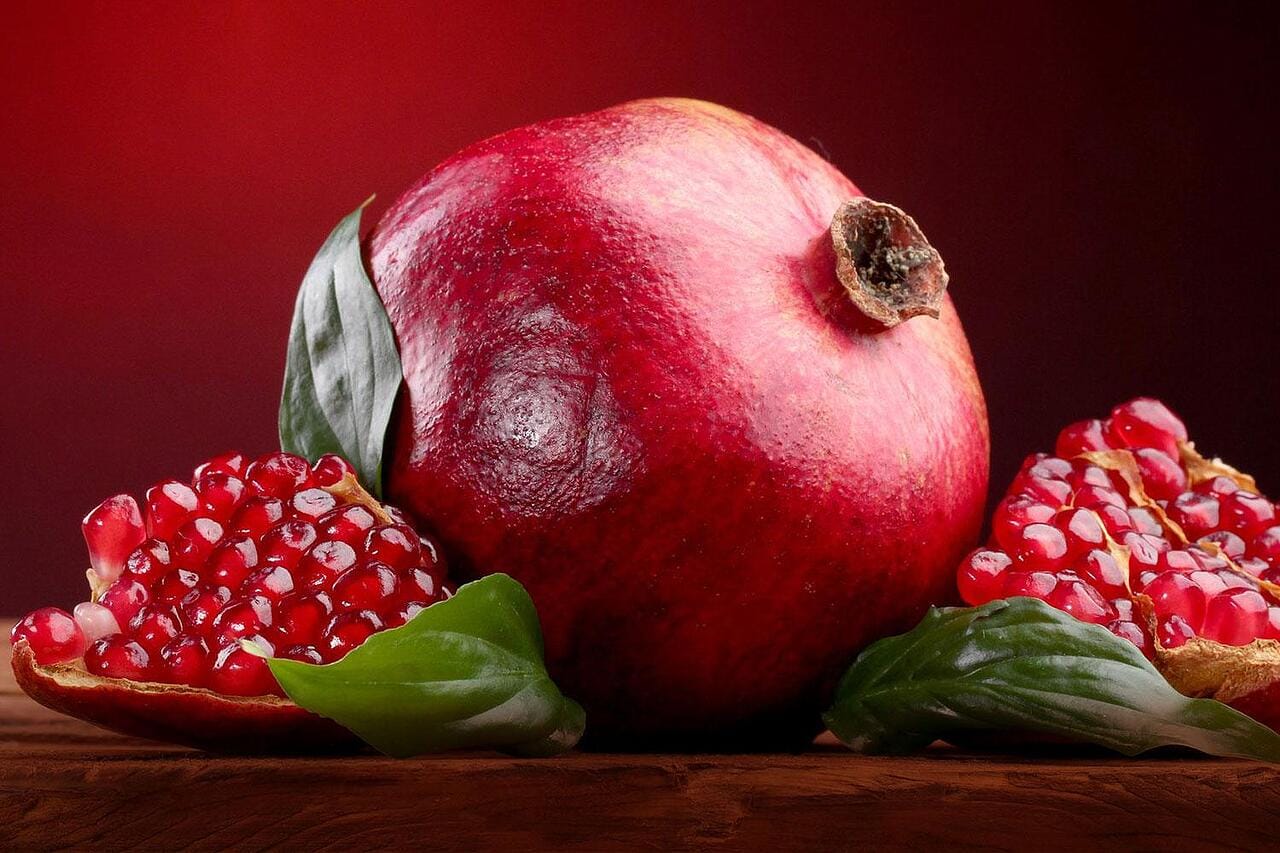
Pomegranate has been known since ancient times as the "Fruit of Life" and as "Nature's Super Fruit" for its ability to keep our bodies healthy. In this article, we want to tell you a little more about the incredible organic pomegranate oil ( Punica granatum ) which has numerous benefits for the skin, hair and is an extremely useful ingredient for making homemade cosmetics.
Used topically in skin care and massage, organic pomegranate oil increases collagen production, increases skin elasticity, reduces the appearance of scars , promotes skin repair processes, and moisturizes without leaving a greasy film or clogging pores. Its other healing properties are related to its ability to reduce inflammation, protect the skin from sun damage, relieve discomfort associated with psoriasis and eczema, and help restore the skin by accelerating wound healing.
Pomegranate oil works effectively on all hair types, hydrating and strengthening hair, protecting it from adverse environmental factors. It stimulates scalp circulation, eliminates impurities and dandruff, prevents follicle damage and increases hair growth.
History of the use of pomegranate oil
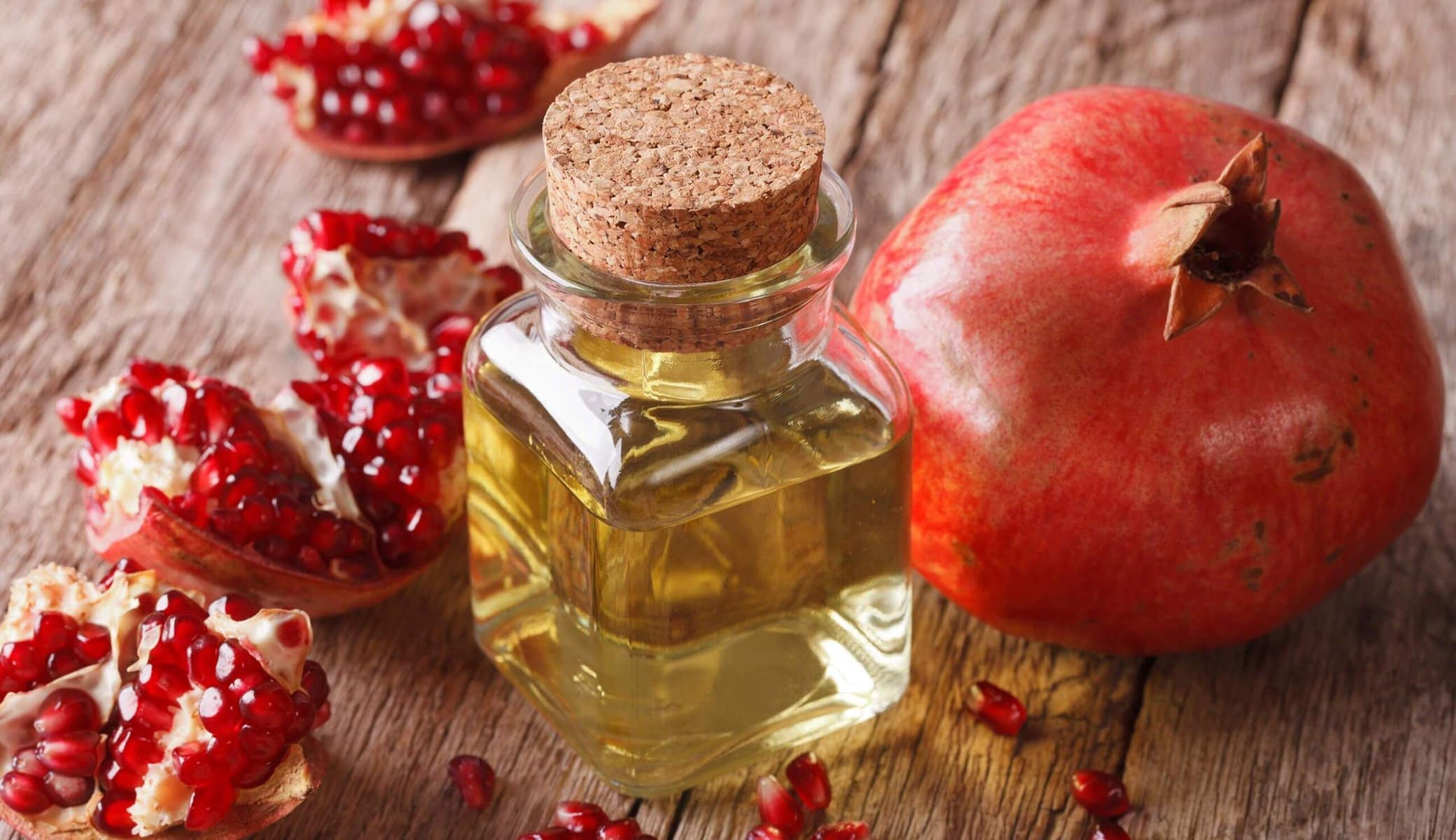
According to some historical sources, the pomegranate was known as early as 4000 BC. These fruits were grown around the Mediterranean Sea and in the East, covering regions from Iran to the western Himalayas in northern India. There are many theories and legends about religious, cultural, spiritual and medical practices describing the fruit and its properties. It has traditionally been associated with abundance, ambition, beauty, eternal life, fertility, hope, human civilization, the indissoluble bond of marriage, mystery, holiness, resurrection.
Each part of the pomegranate fruit had a specific purpose: the delicate flower was crushed to obtain a red dye, the peel was used to dye the skin, the "shining", "ruby" seeds were used not only for food, but also to make medicines, cosmetics and anti-parasitic tonics.
In Greek mythology, the pomegranate represents the cycle of death and rebirth. In an old story that explains the changing of the seasons, Hades, the god of the Underworld, is said to have kidnapped Zeus's daughter, Persephone, to marry her. In the underworld, where she was left without food or water, her captor convinced her that the seeds of the beautiful pomegranate fruit were jewels meant to be tasted. Unaware that those who consume food or water in the Underworld will be cursed to spend eternity there, she gives in to the temptation.
Since she only ate 6 of the seeds, however, she was sentenced to 6 months imprisonment in the Underworld each year instead of an eternity. These months were the coldest period of the year - winter, during which the earth suffered. Every year the beauty was released for 6 months, a time during which the earth seemed to be reborn and enjoyed good weather. Flowers bloomed, nature awakened to new life, a period called the seasons of spring and summer.
In Ancient Egypt from 1600 BC pomegranates were symbolized as life after death, which is why they were painted on the walls of dwellings and on tombs. Images of the fruit have been found in temples, mosaics, on the robes of priests and on coins.
Roman women fashioned hats from pomegranate plant sprigs to indicate their marital status, and armies carried spears that replaced the spikes on their tips with pomegranates, which were seen as a sign of strength.
In addition to its beauty, this fruit with revitalizing properties offers countless health benefits, which has given it the status of a legendary and influential fruit that is very valuable to human civilization.
The benefits of pomegranate oil
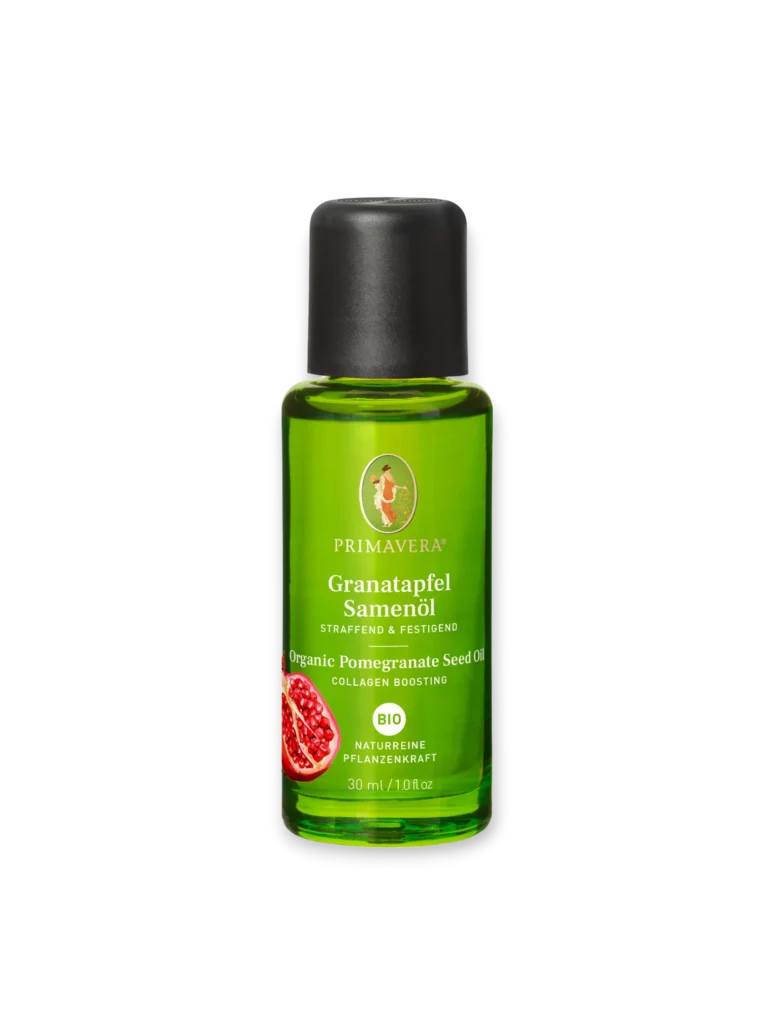
The main chemical constituents of this great oil are: punic acid, oleic acid, linoleic acid, palmitic acid, stearic acid, phytosterols and tocopherol (vitamin E).
It is known that PUNICIC ACID:
- Helps increase the body's resistance after experiencing inflammation.
- Soothes muscle pain.
- Reduces swelling.
- Increases collagen production and reduces its breakdown, thus preventing the signs of skin aging.
- Rejuvenates and strengthens hair, leaving her looking radiant and feeling healthier.
OLEIC ACIDS (OMEGA 9) are known for their properties to:
- They maintain the softness, elasticity and shine of the skin and hair.
- They stimulate growth of the hair, making it stronger and more elastic.
- They reduce the appearance of signs of aging, such as premature wrinkles and fine lines.
- They help to eliminate dandruff and thus support hair growth
- They increase immunity.
- They exhibit antioxidant properties.
- Prevent joint inflammation, stiffness and pain.
LINOLEIC ACIDS (OMEGA 6) have the following properties:
- They moisturize the hair and promote its growth.
- Facilitate wound healing.
- They are an effective emulsifier in the formulation of soaps and quick drying oils.
- They exhibit anti-inflammatory properties.
- Soothes acne and reduce the chances of future outbreaks.
- They promote the retention of moisture in the skin and hair.
- They are used in an oil mixture, thus being useful for use on acne-prone skin.
PALMITIC ACID is known to:
- It has emollient properties.
- Softens the hair, without leaving a greasy or sticky residue.
- Is one of the most common saturated fatty acids.
STEARIC ACID:
- Owns cleaning properties that cleanse dirt, sweat and excess sebum from hair and skin.
- Е an ideal emulsifier that binds water and oil.
- Maintains and protects hair from damage without reducing its shine.
- Softens the skin.
PHYTOSTEROLS are known for the following properties:
- They increase the production of collagen.
- They protect the skin from sun damage.
- They make the skin tighter and more beautiful.
- They increase immunity.
- They reduce the appearance of scars and other undesirable defects.
Vitamin E is known to:
- It has antioxidant properties that slow down aging and boost circulation.
- Clears scars and blemishes on the skin.
- Prevents the loss of moisture from the skin and hair.
- Soothes skin that has been burned.
- Deeply cleanses pores and balances oil production.
Pomegranate oil is also suitable for irritated and sun-damaged skin. Its ability to restore dry or aging skin makes it an ideal ingredient in homemade cosmetic mixtures. The oil stimulates cells in the outer layer of the epidermis and promotes repair processes. This also reduces the appearance of scars. In fact, the oil is suitable for all skin types, including oily, acne-prone skin, as it moisturizes without leaving a greasy layer or clogging pores.
The high antioxidant content of pomegranate oil helps prevent damage caused by free radicals. For those suffering from skin conditions such as acne, eczema and psoriasis, it offers hydration that relieves discomfort. By directing nutrients to skin cells, pomegranate oil accelerates skin repair to help heal wounds and restore skin health.
Pomegranate oil is effective on all hair types, hydrating and protecting it from environmental aggressors. By stimulating scalp circulation and removing dirt and build-up, pomegranate oil prevents hair follicle damage and promotes the growth of healthier, more beautiful hair. Its antibacterial properties protect the scalp against bacteria that contribute to conditions such as psoriasis and scalp eczema, and relieve the redness, itching and inflammation associated with these conditions. Pomegranate oil balances the pH level of the scalp and counteracts oiliness.
How is pomegranate oil extracted?
Pomegranate oil is obtained by cold pressing its ripe seeds, thus preserving the quality of the oil, as well as its enzymes, nutrients and vitamins. The color ranges from pale yellow to golden yellow and has an aroma characteristic of the Omega-5 fatty acid odor profile. Pomegranate oil that undergoes further processing is either colorless or yellow, and its characteristic aroma is similar to that of most oils. The final color of pomegranate oil can also vary in color from soft amber to dark red.
Useful recipes with pomegranate oil

Due to its numerous benefits, pomegranate oil finds application in massage oils, facial oils, lotions, creams, serums, soaps, lip balms, shampoos, and other hair care products.
Used topically, pomegranate oil is an ideal ingredient for anti-aging moisturizers that not only hydrate the skin but also facilitate its healing.
Anti-aging serum (normal and combination skin)
- 20 ml organic pomegranate oil
- 10 ml organic jojoba oil
- 5 drops frankincense essential oil
- 3 drops lavender essential oil
- 5 ml vitamin E

Mix the ingredients in a suitable container (ceramic or glass). Before going to bed, gently massage your face with 4 drops of the serum and leave it on overnight. The mixture improves skin elasticity and tone, balances sebum and pH, and leaves the skin smoother and more radiant.
To prevent scarring and pigmentation and relieve acne or skin conditions like psoriasis, rosacea, and eczema, gently wash the affected areas, then apply a few drops of pomegranate oil directly to the areas.
Facial oil for dry or mature skin
- 10 ml organic pomegranate oil
- 10 ml rosehip oil
- 2 drops carrot seed essential oil
- 2 drops rose essential oil
- 2 drops frankincense essential oil
Mix the ingredients and pour the mixture into a 20 ml glass dropper bottle . Shake well before each use. Apply a few drops with your fingertips to your face in gentle circular motions. Use within 6 months. Store homemade serums in the refrigerator and write down the date of preparation.
Pomegranate oil can be applied directly to the scalp to restore shine to dry hair and reduce environmental damage. A few drops can be added to a natural shampoo or conditioner, or applied as a serum to the ends of well-washed, towel-dried hair.
You can mix pomegranate oil with coconut oil in a ratio of 1:4, heat the mixture slightly and apply it to your scalp. Leave it for 2 hours and wash it off with a sulfate-free shampoo. Do this once a week.
Massage mixture for inflammation and pain
- 60 ml pomegranate oil
- 4 drops yarrow essential oil
- 4 drops turmeric essential oil
- 4 drops German chamomile essential oil

Massage the painful areas in the joints or muscles with gentle circular movements.
For therapeutic massage: 1 tablespoon of pomegranate oil can be mixed with up to 15 drops of suitable essential oils (e.g. myrtle, camphor, oregano, myrrh, lavender) and massaged onto the affected areas.
For a soothing bath mixture: mix 8 drops of pomegranate oil in 3 handfuls of mineral bath salt (or with whole milk) and dissolve in warm water.
More interesting articles from the blog
- Jojoba oil – benefits and uses for skin and hair
- Safflower oil – the unknown gift of nature
- Almond oil – properties for skin and hair
- Rosehip oil – the fountain of youth
- Argan oil – the gold of Morocco
Categories
- Aromatherapy
- Essential oils
- Carrier oils
- Diffusion methods
- Natural cosmetics
- Recipes with essential oils
- News
Conclusion
Pomegranate oil is a versatile ingredient for skin and hair care – from anti-aging serums to massages and scalp care. Choose cold-pressed organic oil and do a tolerance test if you have sensitive skin.
The information in this article is for informational purposes only and is not a substitute for professional medical advice.
Translation: Nadezhda Georgieva
Sources: New Directions Aromatics, Wikipedia
Photos: Depositphotos, Primavera, makasa.org, all rights reserved


