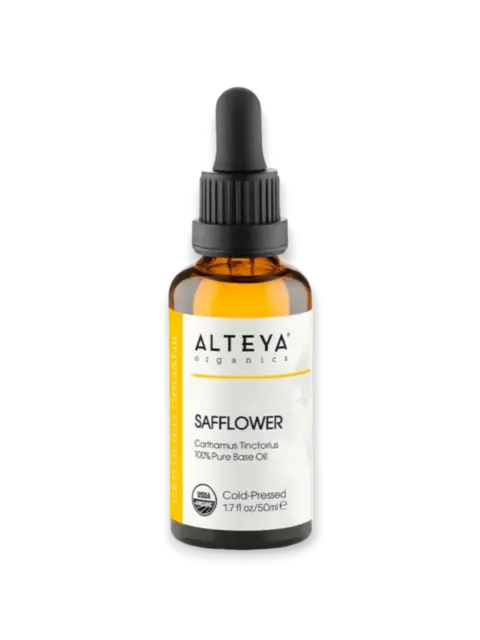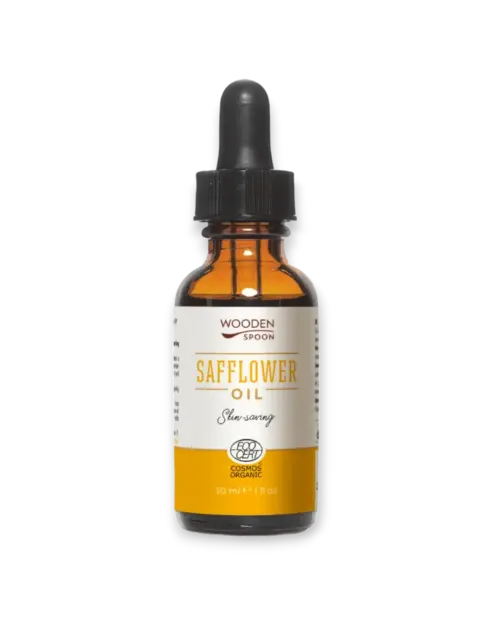
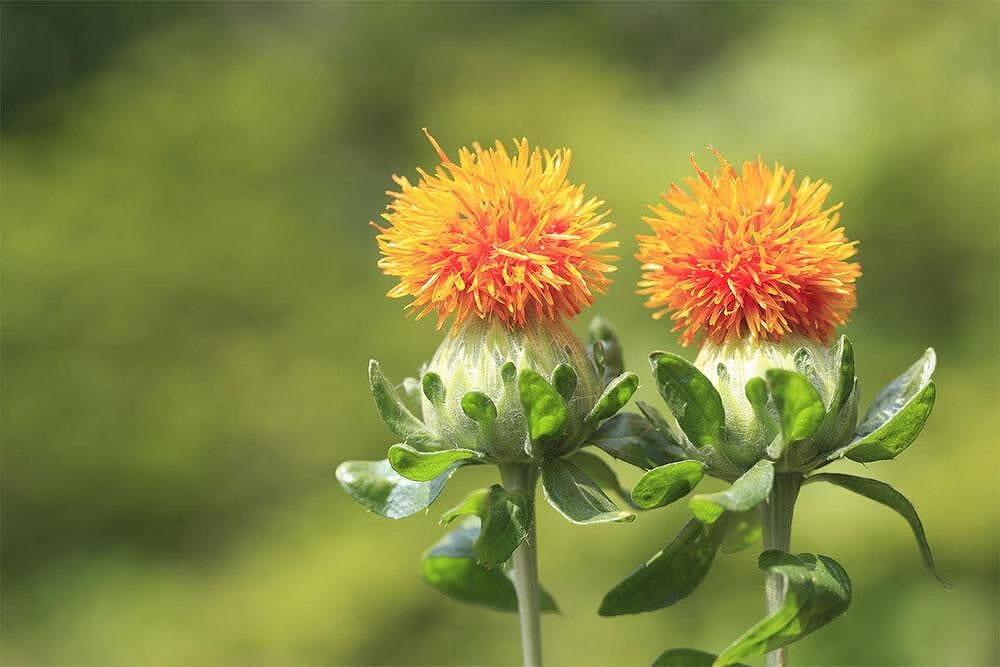
Are you looking for a base, vegetable oil that is also suitable for acne-prone, combination or sensitive skin? Well, let us tell you about safflower oil, which we are convinced will win you over with its extremely beneficial properties. Safflower oil (also known as safflower oil) is a cold-pressed oil that is extracted from the seeds of the Carthamus tinctorius shrub . It is increasingly used in natural and organic cosmetics, as it hydrates dry or acne-prone skin, soothes irritation, rashes and inflammation. It improves the texture, appearance and health of the skin.
Safflower oil, although not very popular, is a base oil, part of the ingredients of many moisturizing cosmetic products. It is used in massage mixtures, due to its rapid absorption, ease of washing and lack of strong coloring (as is the case with rosehip oil). Extremely suitable for preparing homemade cosmetic products for the face, body and hair, for relaxing aromatherapy massages. It is quickly absorbed by the skin and has a comedogenic index of 0 (does not clog pores), which makes it a universal oil for any skin type.
History and interesting facts
Saffron is one of the oldest crops grown by man. It was first cultivated 4000 years ago. The plant is grown primarily as an oil crop, but its flowers are also used for culinary, textile and medical purposes. Safflower oil is tasteless and colorless, and its nutritional value is close to sunflower oil. It is used for cooking, for flavoring salads and for the production of margarine. But we will not consider its nutritional properties here, but will pay attention to its usefulness in cosmetic applications.
As mentioned above, safflower oil is extracted from the seeds of the plant Carthamus tinctorius , which looks similar to the milk thistle. The last part of safflower's botanical name refers to its function of coloring foods and drinks. Although the name closely resembles the expensive herb saffron, it should not be confused with that plant - Crocus sativus is the botanical name for the saffron crocus, which has nothing in common, neither in appearance nor in properties, with safflower. Saffron is also known by its names safflower or carthamus.

In the past, the plant was grown for the production of red and yellow dyes, for use in medicines, and also for coloring and flavoring various foods. Remains of saffron were found in the tomb of Pharaoh Tutankhamun, and mummies were often wrapped in sheets dyed with this plant. Saffron was believed to have the ability to effectively purify the blood by eliminating body waste and toxins. It also cleanses tissues and joints, thus soothing arthritis and local rashes, while improving liver function.
An interesting fact is that the Indian Hopi tribe was known for coloring their bread with this particular plant. Saffron has had other interesting uses in the past. Safflower flowers have been used in the preparation of a tea designed to relieve respiratory congestion with secretions, as well as to soothe the symptoms of fever and jaundice. It was believed that drinking saffron tea could soothe various complaints and ailments.
In the 60s, safflower oil was used as a natural colorant in the production of industrial exterior veneers such as paints and varnishes. Artists have also used it as a solvent.
Main ingredients
The main ingredients of safflower oil are: oleic (Omega-9), linoleic (Omega-6), palmitic, stearic, linolenic and palmitoleic saturated fatty acids. Overall, these saturated fatty acids are emollient and have many beneficial properties for both skin and hair. For example, palmitic acid, which is among the most common saturated fatty acids, has deeply nourishing properties. Stearic acid has a cleansing effect, removes dirt, sweat and excess sebum from hair and skin. An ideal emulsifier that binds water and oil. Alpha-linolenic acid, also known as Omega-3, reduces inflammation and helps control blood clotting in the skin. Soothes joint pain and relieves stiffness, thereby improving flexibility.
Beneficial properties for skin and hair
Safflower oil has a light consistency and non-greasy texture that is ideal for hydrating dry or acne-prone skin , while soothing irritation, rashes, and inflammation. It is known to help unclog pores and also promotes cell regeneration to reduce the appearance of scars and signs of aging, keeping skin youthful and beautiful. With regular application, safflower oil can help improve the texture, tone, and overall appearance of your skin.
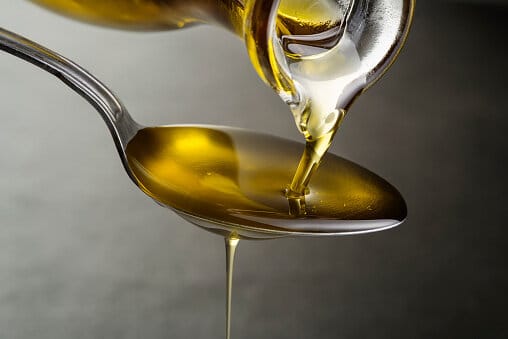
Safflower oil is extremely beneficial and works effectively to remove whiteheads and blackheads, and also relieves unwanted acne. If you suffer from enlarged pores, the oil is a wonderful addition to your morning routine. After moisturizing your skin with a suitable product or floral water, apply a few drops to the desired areas and massage again with light movements.
Safflower oil stimulates hair growth, strengthens it, adds shine, and improves circulation. The antioxidant and nourishing properties of this amazing oil are known to protect hair and shield it from environmental aggressors.
How can we use safflower oil?
For face and body skin
It has now become clear that safflower oil has a comedogenic index of 0, which means that it is a very light oil and does not clog the pores of the face. It absorbs quickly, leaving no greasy areas. That is why this incredibly nourishing oil is suitable for every skin type! Valuable safflower oil can help you regain the elasticity of your skin by hydrating and soothing it. To soften and elasticize dry and rough areas of the skin of the face, massage 2–3 drops of safflower oil every morning and evening on well-cleansed skin.

About the hair
Safflower oil is also known to reduce hair loss and promote hair growth. To nourish your hair, apply a few drops to dry, split ends. Safflower oil can be applied to washed and combed hair by rubbing up to 3 drops into your palms and gently massaging into the scalp with your fingertips. Leave it on for about 45–60 minutes, then wash your hair very well with an organic shampoo that does not contain drying ingredients and sulfates. Do the procedure once a week and you will soon enjoy the wonderful effect.
Recipes with safflower oil

Nourishing body oil
- 60 ml safflower oil
- 5 drops bergamot essential oil
- 5 drops chamomile essential oil
- 5 drops geranium essential oil

Mix the ingredients in a clean bottle. Massage daily into preferred areas of the skin. In the MAKASA store you will find safflower oil in a convenient bottle (Alteya Organics), in which you can easily mix all the ingredients. Store in the refrigerator or in a cool, dry place - without preservatives, the shelf life is limited.
Light facial oil (acne-prone skin)
- 1 tbsp. (minimum 20 ml) safflower oil
- 2–4 drops tea tree essential oil
- alternative: lavender / ravintsara / tree ho

First, wash your face with warm water and a suitable non-drying cleanser. Then, while your skin is still damp, gently apply 1–2 drops of the oil and massage your face in gentle circular motions, avoiding the eye area. The oil nourishes the skin and reduces inflammation in case of redness and puffiness.
Hair mask with safflower oil
- 1 tsp safflower oil
- 1 tsp coconut oil
- 5 drops rosemary essential oil
- 5 drops tea tree essential oil
Apply the mixture to the roots and distribute it along the entire length of the hair. This mask stimulates hair growth while soothing and preventing dryness and itching.
Massage mixture for dry and damaged skin
- 10 tsp safflower oil
- 5 drops lavender essential oil
- 2 drops chamomile essential oil
- 2 drops frankincense essential oil
Use 1 tsp of the mixture and apply it to preferred areas with light massage movements, focusing on dehydrated areas.
More interesting articles from the blog
- Jojoba oil – benefits and uses for skin and hair
- Almond oil – properties for skin and hair
- Black cumin oil – benefits and uses
- Argan oil – the gold of Morocco
- Rosehip oil – the fountain of youth
Categories
- Aromatherapy
- Essential oils
- Carrier oils
- Diffusion methods
- Natural cosmetics
- Recipes with essential oils
- News
Conclusion
Safflower oil is a light, fast-absorbing carrier oil with a comedogenic index of 0 – suitable for face, body and hair, including acne-prone skin. Choose cold-pressed oil from a reliable source and do a tolerance test for sensitive skin.
The information in this article is for informational purposes only and is not a substitute for professional medical advice.