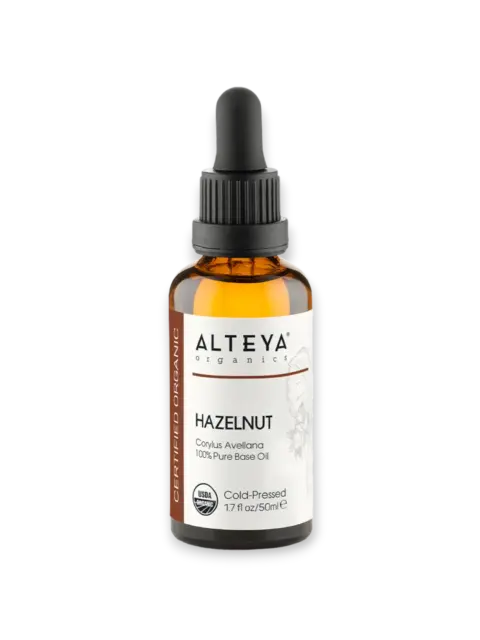

Hazelnut oil is rich in fatty acids, proteins, minerals and vitamins. It's good for your overall health, and many people use hazelnut oil for skin care as well. This healthy oil can protect, nourish and hydrate your skin and keep it soft and supple. In this article, we delve into the benefits of hazelnut oil for skin and how to use it.
The fatty acid content of hazelnut oil is similar to that of olive oil. It contains a high content of oleic acid. It can be used like olive oil in skin care products.

HARVEST
September-October

PART OF THE PLANT
The nuts

METHOD OF EXTRACTION
Cold pressing
Application and action
In most cases, hazelnut oil is safe for people with sensitive skin. Used as an astringent, it is different from the alcohol-based astringents often found in beauty stores, drugstores, and pharmacies.
Alcohol-based astringents are harsh and can dry out or irritate your skin. Hazelnut oil is a natural, alcohol-free astringent that usually doesn't cause irritation.
The high content of vitamin E and fatty acids in hazelnut oil can help increase hydration in the outermost layer of the skin. By keeping the skin hydrated, vitamin E also helps to improve its elasticity, making it look firm and refreshed.
The fatty acids and vitamin E in hazelnut oil also make it an effective moisturizing product. These ingredients help create a natural oil barrier that helps your skin retain water and keep it from drying out.
Hazelnut oil contains tannins, which are powerful antioxidants. The tannins in hazelnut oil make it an astringent that can help dry out oily skin, clean and shrink pores, and eliminate bacteria.
Collagen is an essential protein that holds bones, organs and tendons together. It gives your skin structure and elasticity. As we age, our skin produces less collagen, but vitamin E can help. It stimulates the production of collagen by reducing the action of the enzyme that destroys collagen.
The vitamin E in hazelnut oil can also help reduce fine lines.
Vitamin E is an important antioxidant in skin care, as it helps to smooth it, as well as to retain water and moisture in the outer layer of the skin.
It is important to note, however, that some studies show that products combining vitamin E and C are more effective in fighting the signs of aging than products with vitamin E alone. Since hazelnut oil does not have vitamin C, it is good to combine it with such a product when used in anti-wrinkle recipes.
But hazelnut oil itself can help with photoaging: Research shows that fatty acids like those in hazelnut oil can also help reduce the appearance of fine lines or wrinkles caused by sun exposure.
Sunlight creates free radicals that damage cells and lead to signs of skin aging. Vitamin E helps protect your body by neutralizing free radicals and protecting cell membranes from sun damage.
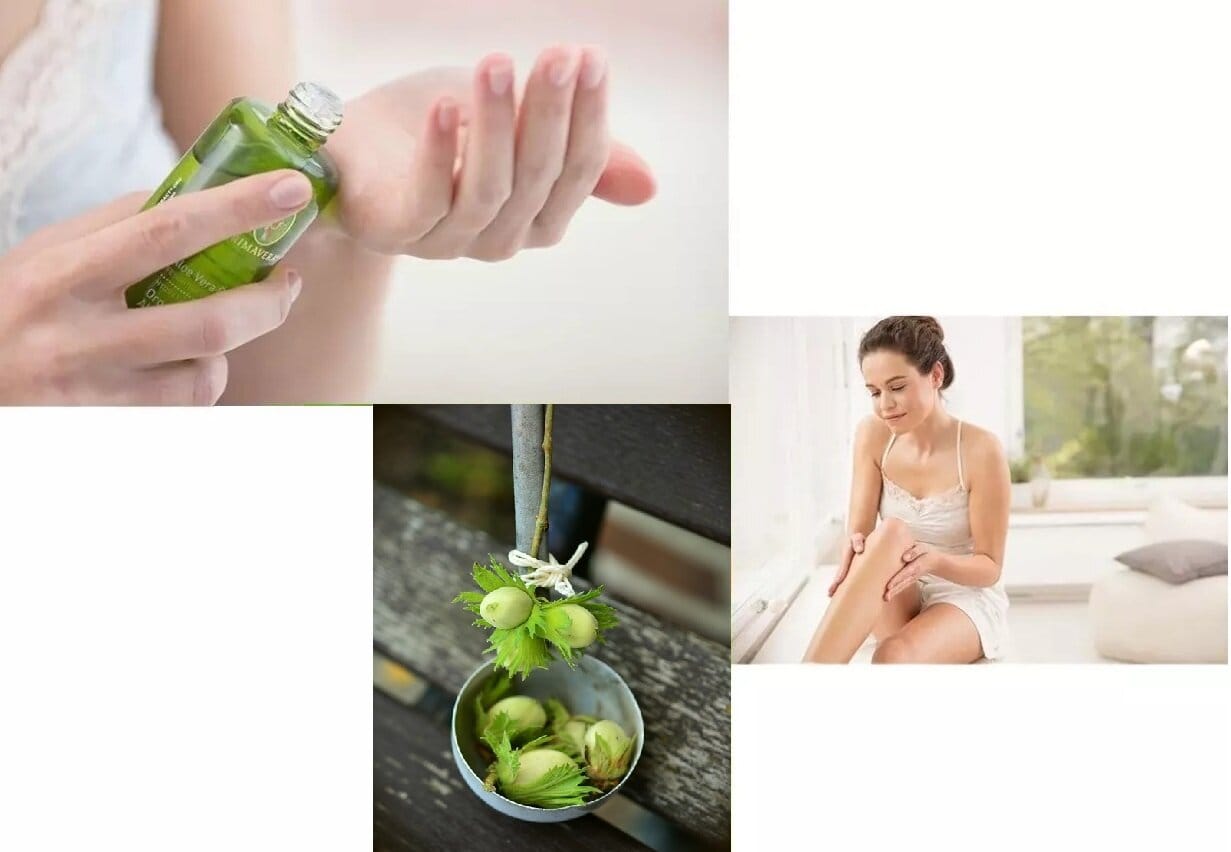
| Physical Application: Anti-aging, dry skin, fine lines and wrinkles | Physical action: Firming, antioxidant, hydrating, smoothing |
Possible side effects and risks
Research is limited on the possible side effects and risks of using hazelnut oil for skin care.
The American College of Allergy, Asthma and Immunology recommends that people who are allergic to tree nuts (such as hazelnuts) avoid tree nut oils or any products that contain them.
Even if you are not allergic to tree nuts, it is a good idea to check for an allergic reaction before using hazelnut oil. An easy way to do this is with a skin test.
Hazelnut oil is rich in vitamin E, which is considered safe for most people. However, getting too much of it through food, supplements, or by using it on the skin can harm your health.
Too much vitamin E can cause:
- scream
- weakness
- nausea
- blurred vision
- gaseous
- diarrhea
If you are concerned about your vitamin E intake, consult your doctor before using hazelnut oil.
You should also talk to your doctor before use if you are taking an oral blood thinner. Too much vitamin E can increase the effect of the drug, ultimately leading to increased bleeding and longer clotting times.
Recipes with hazelnut oil

You can apply hazelnut oil on your skin alone or combine it with other oils. You can also use it as a base for making your own lotions or creams.
Before applying the full amount, be sure to do a skin test. Rub a dime-sized amount of oil onto the inside of your forearm. Cover the area with a bandage and wait 24 hours. If you experience any irritation, rinse your forearm thoroughly and do not use the oil again. If you do not notice any inflammation or irritation within 24 hours, hazelnut oil should be safe for you.
Once the oil has successfully passed the sensitivity test, you can apply it:
Cleansing the face with hazelnut oil
- ½ tsp. hazelnut oil

Cover your face with a hot, damp washcloth for about 20 seconds. Remove the washcloth and massage about 1/2 tsp. of hazelnut oil into your skin. Leave the oil on for 30 seconds. Use a hot, damp washcloth to gently wipe it off. This process cleanses the face and removes most types of makeup. Use morning or night (before night creams).
Facial scrub
- 1 tbsp yogurt
- 1 tsp ground oatmeal
- 1 tsp hazelnut oil
- 5 drops jasmine absolute
- 2 drops essential oil of myrrh
- 1 drop patchouli essential oil
Mix all ingredients in a dark glass jar. Shake well. Store in a cool, dark place, preferably in the refrigerator. Use twice a week.
Antifungal oil
- 1 tbsp. hazelnut base oil
- 4 drops muscat essential oil
- 4 drops essential oil of myrrh
- 2 drops lavender essential oil

Mix all ingredients in a suitable glass container. Apply to affected areas at least twice a day on cleansed skin and feet.
More interesting articles from the blog
- Evening primrose oil – benefits and uses
- Ylang-ylang essential oil – benefits and uses
- Neem oil – benefits and uses
- Grape seed oil – benefits and uses
- Geranium essential oil – benefits and uses
Categories
- Aromatherapy
- Essential oils
- Carrier oils
- Diffusion methods
- Natural cosmetics
- Recipes with essential oils
- News
The information in this article is for educational purposes only and is not intended to serve as a basis for prevention or treatment.
Sources:
- https://www.healthline.com/health/beauty-skin-care/hazelnut-oil-for-skin
- 600 Aromatherapy Recipes / Beth Jones
Photos: Primavera Life