
Aloe vera – application of the plant in dermatology and natural cosmetics
Aloe vera ( Aloe barbadensis Miller ) is a succulent plant that occupies a central place in modern dermatology, cosmetology and holistic health care. Thanks to its moisturizing, regenerating and anti-inflammatory properties, it is an extremely valuable ingredient for maintaining healthy skin and hair.
Historical context and origins
The use of aloe vera dates back thousands of years. The ancient Egyptians called it the “plant of immortality” and the “plant of eternity”. Historical sources show that it was an indispensable part of skin and hair care, and due to its strong antibacterial properties, it was also used in complex embalming rituals. In ancient Mesopotamia, the plant was used for internal purification of the body, as it was believed to have divine healing powers.
Geographically native to the regions of North Africa, Southern Europe and the Canary Islands, Aloe vera is now successfully cultivated in tropical and subtropical climates around the world. It is established as a major therapeutic product in the traditional medical systems of many cultures, including Chinese, Indian (Ayurvedic) and Middle Eastern traditions.
Botanical classification
The genus Aloe comprises over 500 species of plants belonging to the family Asphodelaceae . Despite the enormous biodiversity, the most widespread and economically important species remains Aloe barbadensis Miller . This is due to the optimal ratio of beneficial substances in its leaves. The plant is a succulent, which means that it has evolved to store large amounts of water in its fleshy leaves in order to survive in the harsh conditions of arid and semi-arid latitudes.
Leaf morphology and main active ingredients
The effectiveness of aloe vera is due to its complex chemical profile. For the purposes of the cosmetic industry, it is important to distinguish the main structural components of the leaf from which the various raw materials are extracted.
- Gel (Internal Parenchyma): The interior of the leaf is filled with a clear, mucilaginous tissue. The gel contains approximately 99% water, and the remaining 1% is a concentrated complex of biologically active components. These include vitamins (A, C, E, which are powerful antioxidants), key enzymes (which promote regeneration and reduce inflammation), minerals and amino acids. Of utmost importance are polysaccharides, and in particular acemannan, which stimulates immune processes in the skin.
- Juice/Latex (Middle Layer): Just beneath the hard outer bark is a layer containing a yellowish secretion. This sap is rich in anthraquinone glycosides, the most important of which is aloin. When taken orally, aloin has a pronounced laxative effect.
Differences between cosmetic raw materials: Gel and Juice
In the composition of cosmetic formulations, the terminology often includes the terms gel ( Aloe barbadensis Leaf Gel ) and juice ( Aloe barbadensis Leaf Juice ).
The gel is extracted by carefully filleting the interior of the leaf, removing the bark and latex layer. It is of high molecular weight, viscous, and is used primarily for topical application due to its ability to create a protective, hydrating film on the epidermis.
The juice is obtained by processing the whole leaf or by liquefying the gel. In its raw, unfiltered form, it retains all the fibers and particles, as well as its specific bitter aroma. Since the raw juice contains aloin, the raw materials intended for use in cosmetics and dietary supplements necessarily undergo a purification process. In cosmetic products, the purified juice is often used as a moisturizing base for tonics, micellar waters, lotions and shampoos.
Dermatological and cosmetic benefits
Aloe vera offers multi-spectrum care that addresses the processes of hydration, aging prevention, and inflammation relief, providing visible results with daily use.
- Optimal hydration and sebum balance: Aloe is absorbed into the epidermis extremely quickly. The mucopolysaccharides in its composition bind moisture in the skin, providing deep hydration. Since it does not leave greasy marks, it is suitable for oily and combination skin.
- Protection and recovery after UV radiation: The rich content of antioxidants helps neutralize free radicals generated by ultraviolet radiation. The gel effectively relieves sunburn by reducing redness and accelerating the recovery of damaged tissues.
- Anti-aging effect (Anti-age): The plant stimulates the activity of fibroblasts – the cells responsible for the production of collagen and elastin. The improved synthesis of these structural proteins increases skin elasticity and reduces the appearance of fine lines and wrinkles.
- Soothing dermatological conditions: The natural content of anti-inflammatory components makes aloe vera an effective companion in formulations to relieve acne, psoriasis, and dermatitis by reducing itching and scaling.
- Improving the texture of stretch marks and scars: By stimulating cell regeneration, the plant helps to gradually fade stretch marks and improve the overall skin relief.
- Hair and scalp care: Amino acids help strengthen the hair follicle. Enzymes exfoliate, removing dead cells from the scalp, which is useful for dandruff. Aloe hydrates the hair along the lengths, restoring its shine without additional weight.
Rules for safe application and product selection
For maximum absorption of the active ingredients, products containing aloe vera should be applied to damp skin immediately after cleansing. This seals moisture in the epidermis. Once fully absorbed, the cosmetic routine can continue with the application of a cream or serum.
Preparing homemade cosmetics using directly potted aloe vera carries risks. There is a risk of contamination of the gel with latex (aloin), which is a potential skin irritant. For cosmetic formulations, it is recommended to use professionally purified and stabilized organic products.
When choosing raw materials, it is important to monitor the processing method. Exposure to high temperatures can denature beneficial enzymes. Cold pressing and stabilization immediately after harvest ensure the preservation of therapeutic potential.
Recipes with aloe vera

Aloe vera is an excellent base for creating personalized natural cosmetics. The following formulations combine the properties of the plant with the action of base and essential oils.
Moisturizing body balm after sun exposure
- 2 tbsp. organic aloe vera gel
- 2 tbsp. organic coconut oil
- 3 drops fine lavender essential oil

This formula is designed to soothe and restore the skin's barrier function. The ingredients are homogenized to a fluffy consistency. The mixture is applied to the affected areas and allowed to absorb. Apply up to three times daily. Store in a glass container in the refrigerator. When the coconut oil hardens, leave the formula at room temperature before use.
Moisturizing facial serum with smoothing effect
- 3 tbsp. organic aloe vera gel
- 1 tsp vegetable glycerin
- ½ tsp. argan oil (or alternative base oil)
- 1 tsp vitamin E
- 4 drops tea tree essential oil
- 4 drops lavender essential oil
The serum deeply hydrates and improves elasticity, serving as an excellent base for makeup. The components are mixed in a dark glass bottle. Three drops of the serum are distributed between the palms and applied to damp skin. The shelf life when stored in the refrigerator is six months.
Night Restorative and Balancing Serum
- 3 tsp organic aloe vera gel
- 3 drops organic tea tree essential oil
Antibacterial formula, suitable for soothing inflammation and accelerating healing of acne. The mixture is prepared in a glass bottle with a pipette. It is applied topically to problem areas before bed and washed off the next morning.
Oil for the prevention and treatment of stretch marks
- 50 ml organic pomegranate oil
- ⅓ tea cup aloe vera gel
A mixture to improve skin elasticity and reduce redness in scars. Transfer the formula to a glass bottle. Rub in circular massage movements on the target areas every night.
Two-phase facial cleansing lotion
- ½ tea cup aloe vera gel
- 1 teaspoon filtered water
- ¼ teaspoon organic olive oil
A delicate makeup remover formula that is safe for the eye area. Strain the mixture and store in a convenient container. Due to the lack of emulsifier, the product must be shaken vigorously before each use. Apply to the skin using a cotton pad.
Exfoliating scrub for face and body
- 1 tbsp. aloe vera gel
- ¼ teaspoon brown sugar
- 1 tbsp selected base oil (jojoba, argan oil or olive)
A product for removing dead skin cells and improving microcirculation. The mixture is applied to the skin with light massage movements, then washed off first with warm and then with cool water. The routine ends with the application of a suitable moisturizing product.
More interesting articles from the blog
- Easy recipes for sunburn
- Floral waters – a dose of freshness for the body
- Calendula oil – benefits and uses
- Jojoba oil – benefits and uses for skin and hair
- Argan oil – the gold of Morocco
Categories
- Aromatherapy
- Essential oils
- Carrier oils
- Diffusion methods
- Natural cosmetics
- Recipes with essential oils
- News
Conclusion
Aloe vera remains one of the most versatile plant ingredients in dermatology and natural cosmetics – from hydration and soothing after sun to homemade serums and hair care. Choose purified and stabilized organic products and do a tolerance test for sensitive skin.
The information in this article is for informational purposes only and is not a substitute for professional medical advice.

Sources
https://www.ncbi.nlm.nih.gov/pmc/articles/PMC2763764/
https://www.sciencedirect.com/topics/agricultural-and-biological-sciences/aloe-barbadensis
https://www.mayoclinic.org/drugs-supplements-aloe/art-20362267
https://www.nccih.nih.gov/health/aloe-vera
https://www.iasc.org
https://www.researchgate.net/publication/224892305_Aloe_vera_A_short_review
https://pubmed.ncbi.nlm.nih.gov/11268623
https://www.who.int/publications/m/item/aloe-vera-gel
Written by Kremena Petrova, translated by Magma-Digital Marketing Agency.
Photos: Depositphotos, Primavera Life, all rights reserved
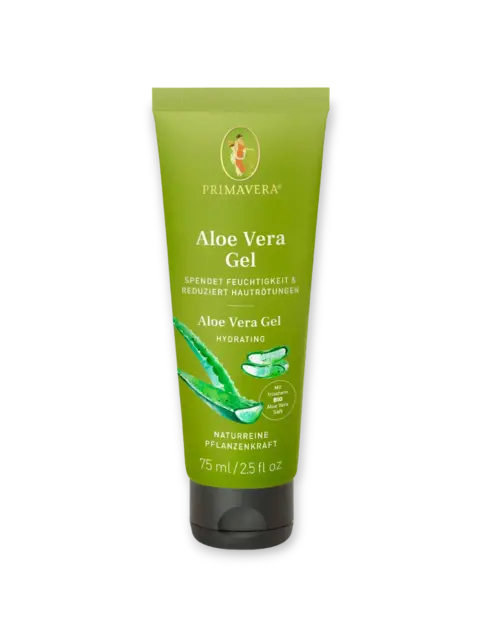 Discount: -20%
Original price was: €15.90.12.72 €The current price is: €12.72.Add to cart
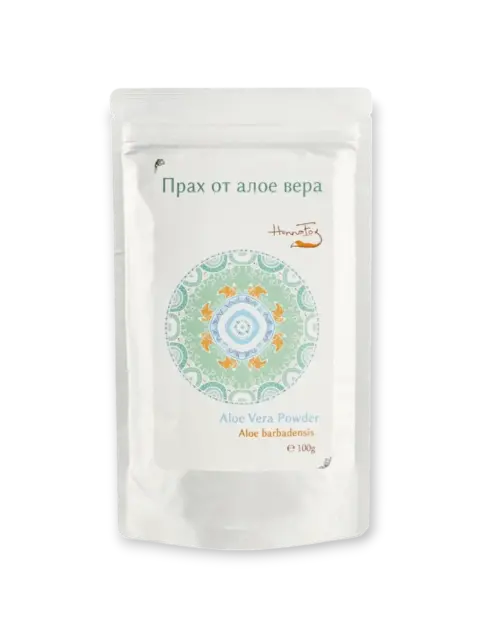
7.05 €Add to cart
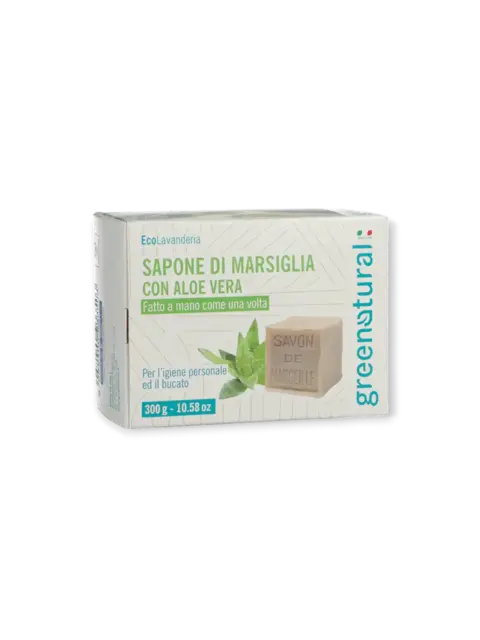 Discount: -15%
Original price was: €7.40.6.29 €The current price is: €6.29.Add to cart
 Discount: -15%
Original price was: €4.00.3.40 €The current price is: €3.40.Add to cart
 Discount: -15%
 Discount: -15%
Original price was: €11.20.9.52 €The current price is: €9.52.Add to cart
 Discount: -15%
Original price was: €4.15.3.53 €The current price is: €3.53.Add to cart
 Discount: -15%
 Discount: -15%
Original price was: €6.90.5.87 €The current price is: €5.87.Add to cart
 Discount: -15%
Original price was: €12.70.10.80 €The current price is: €10.80.Add to cart


