What do we know about organic (bio) and natural cosmetics certificates, and what does their application on a product label guarantee?
More and more people are turning to natural , organic (bio) cosmetics, with sustainable or ethical production, and the "green" lifestyle is becoming more widespread in the fast-paced, consumerist world in which we live.
But the large selection of products on the market can sometimes make it difficult for us to choose “authentic” natural and organic cosmetics. Often, many products are marketed as natural, but contain relatively low levels of natural/organic ingredients. We increasingly have to read the long lists of ingredients on labels and understand their meaning to make sure that the product offered does not really include what we do not want to use.
Standards and certification play an important role in providing assurance that products meet certain minimum criteria for authentic natural/organic products. Although the level of certified products is gradually increasing, there are differences between the main standards regarding the permitted ingredients. Certification also helps build trust, as the standards ensure that products do not contain potentially harmful or unsustainable ingredients.
Regardless of who the certifying body for bio and organic cosmetics is, they all pursue the same goal. The ingredients of certified cosmetics must be as organic as possible. Controlled organic farming is especially encouraged, and the entire production process must be environmentally friendly and sustainable. What are the most general rules that companies must follow:
- Animal testing of products is not allowed.
- Only a few animal ingredients are allowed, which are very well defined.
- Compliance with the CITES Convention (Convention on International Trade in Endangered Species of Wild Fauna and Flora) is one of the main rules that almost all standard certification bodies pay attention to.
- Following the latest trends, it is necessary to follow the principles of green chemistry in the designation of some labels for natural and organic cosmetics.
- Palm oil should only be used if it has RSPO certification (a non-profit organization that has developed global standards for responsible palm oil cultivation with a number of environmental and social criteria that companies must comply with in order to produce Certified Sustainable Palm Oil ( CSPO).
- The use of GMOs - genetically modified organisms - is not allowed, not even labeling.
- Microplastics are strictly prohibited (microplastic particles that seriously damage the ecosystem in the seas and oceans).
It is important to note that each country has its own certification body or association. Here are the main criteria of the majority of certification organizations:
COSMOS-standard AISBL
Founded in 2010, the first single European standard brings together the experience of some of the most stringent certification standards: BDiH (Germany), Soil Association (UK), Ecocert (France), Cosmebio (France), ICEA (Italy) and Ecogarantie (Belgium).

COSMOS-standard AISBL traces cosmetic products from the origin of the ingredients through the technology of their processing to the content of the final product. The packaging, transportation and storage of organic cosmetics are subject to control.
COSMOS cares about the environmental impact of the production and consumption of these products. It divides cosmetics into two classes – natural – when the percentage of natural ingredients is below 95%, and bio (organic) – when the natural ingredients are 95 and above 95%. COSMOS does not have its own logo. The logos of its creators with the inscription COSMOS ORGANIC and COSMOS are used.
The requirements and procedures for certification of BIO cosmetics are as follows:
- Origin and processing of ingredients
- General composition of the product
- Storage, production and packaging
- Environmental management
- Marking and completeness of information on the label
- Supervision, certification and control
ECOCERT
Country: France
Organic certification organization founded in France in 1991. Based in Europe, but carrying out inspections in over 80 countries, making it one of the largest organic certification organizations in the world.
It certifies mainly food and food products, but also cosmetics, detergents, perfumes and textiles. It divides cosmetics into two classes
Organic (Bio)
- Min. 95% of the ingredients are natural or derived from natural sources.
- Min. 95% of plant ingredients to be produced by organic farming.
- At least 10% of the entire product content (including water) must be produced from
- organic farming.
Natural (Eco) Natural (Eco)
- Min. 95% of the ingredients are natural or obtained from natural sources.
- Min. 50% of plant ingredients are produced by organic farming.
- At least 5% of the entire product content is produced by organic farming.
- Cosmetic products that have such a certificate are some of the essential oils of Urtecram, Organic Kitchen
COSMEBIO
Country: France

For the Cosmébio label to be available on the packaging of a natural or organic cosmetic product, it must meet certain criteria. The guarantees offered by the Cosmébio label divide the cosmetics into two classes, Organic (Bio) and Natural (Nat), which are the same as with ECOCERT.
NATRUE
Country: Belgium
An international non-profit association based in Brussels, committed to promoting and protecting natural and organic cosmetics worldwide. Founded in 2007, Natrue has become the guarantor of all true friends of natural and organic cosmetics and welcomes all who commit to the high standards of quality and integrity it offers.
It divides cosmetics into three categories.
Organic / Organic
- There are 13 product categories.
- Specific levels of required natural and 'naturally derived' substances quoted by product type in tables provided in the standard.
- Most products - minimum 20% of natural and max. 15% of the obtained natural substances.
- Min. 95% of natural substances of plant and animal origin must be organic.
Organic / With organic ingredients
As above, but:
- Minimum 15% of chemically unmodified natural substances and max. 15% of the obtained natural substances.
- Min. 70% of natural substances of plant and animal origin must be organic.
Natural / Natural
- Min. natural content level and max. level of derived natural materials determined by product type.
- No organic content required.
- With NATRUE certificate in MAKASA you can find products of: the Bulgarian company IKAROV, the German aromatherapy brand PRIMAVERA
BDIH
Country: Germany
The BDIH is a certification body with strict standards based in Mannheim. Responsible for the quality of cosmetics and natural cosmetics, nutritional supplements, foods, non-prescription drugs. other medical devices. Cosmetics are defined in one class: Natural and must meet the following requirements:
- Raw materials from a natural source or those obtained through permitted ecological processes.
- Certain requirements for listed plant materials to be organic.
- Only certain synthetic preservatives are allowed.
ICEA
Country: Italy
The Institute for Ethical and Ecological Certification ICEA is the main certification body for organic and natural cosmetics in Italy.
ICEA certificates cover food (organic food production and organic farming) and non-food products (organic cosmetics and preparations, ecological textiles, ecological furniture, ecological building materials, green area management, SA8000 certificate).
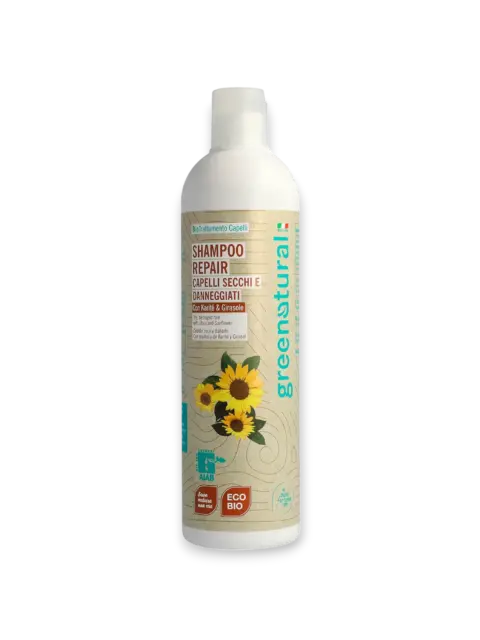
Greenatural and Nebiolina products have such a certificate.
- The use of chemical, synthetic preservatives, synthetic dyes, stabilizers, flavorings, products obtained from oil refining, silicones, polymers, GMOs is not allowed.
- Harmful technologies: atomic decay of products, chemical preservation, aeration of products in vacuum packaging, processed foods with phenol, radioactive irradiation.
- Animal testing is not permitted when testing raw materials.
- It is not allowed to use raw materials of animal origin, during the preparation of which they were harmed, for example, animal collagen or elastin.
AIAB ECOBIO
Country: Italy
Italian Association of Organic Agriculture. It certifies organic products and companies in a wide range of categories, including food products, detergents, cosmetics, bio-fibres and more.
- Formulas consisting of ingredients of natural origin, selected based on ecological sustainability and health criteria.
- ECO BIO products are with surfactants, principles of functionality and plant extracts from organic farming - certified in accordance with the main international regulations.
- Mandatory tests on the final product to prevent unwanted effects.
- Real labels and claims backed by reliable scientific tests and studies.
- An independent public control and certification system with international accreditation, which itself creates the rules, as well as the lists of companies and certified products (including ingredients) and answers questions asked by users.
The products from the Multivitamin series, as well as Greenatural toothpastes , have such a certificate.
Institute KON-CERT Maribor, Slovenia
Country: Italy
Leading certification body in agriculture and forestry, located in Maribor, Slovenia. The institute carries out control in the field of organic production and processing of agricultural products and food, biological-dynamic agriculture according to the DEMETER guidelines, accredited according to the SIST EN ISO / IEC 17065 standard in the field of:
- Organic farming and processing;
- protected agricultural products (PGO, PGD);
- PEFC forest certification approval program.
- The Maribor Agriculture and Forestry Control and Certification Institute is an independent control organization with many years of experience throughout Slovenia.
All Biopark Cosmetics products carry the BIO Slovenia logo, which is awarded by the KON-CERT Maribor Institute. It ensures compliance of the production, processing, packaging, storage and transportation of organic products, food and feed with the applicable regulations for organic farming.
Soil Association
Country: Great Britain
Britain also has some of the highest standards for organic production and processing in the world.
Present on the packaging of any product (cosmetics, textiles, personal care), the Soil Association logo provides guarantees of biological authenticity.
Cosmetics define in one class: Organic and must meet the following requirements:
- Min. 95% organic ingredients (from agricultural ingredients) and only permitted inorganic ingredients, processing aids and water.
- Water is excluded from the organic calculation.
- Products that contain 70-95% organic ingredients may be labeled with the phrase "product containing X% organic ingredients."
Cosmetic products holding such a certificate are some of TISSERAND 's essential oils .
USDA NOP
Country: USA
USDA ORGANIC (United States Department of Agriculture) certifies products and raw materials that do not harm the environment and meet the standards of USDA NOP (National Organic Program of the United States Department of Agriculture). The certificate is approved by IMO - Switzerland (only nitrogen and phosphorus of plant origin are used in the cultivation of plants).
Cosmetic products are defined as 95 – 100% Organic if: They meet the same criteria governing the certification of organic foods.
In these cases, the logo on the front of the package can be used.
Products in MAKASA holding this certificate are: one of the most successful Bulgarian cosmetic companies Alteya Organics , the aromatherapy brand Plant Therapy, the high-quality Bulgarian cosmetics Ecomaat , the natural dyes Cultivator`s
demeter
Country: Germany
One of the strictest certification standards in organic farming! Raw materials from biodynamic agriculture. The producers of this certification body are members of individual regional communities. Each member of such a community has a Demeter contract, through which they commit themselves to work for the further improvement of quality. Since 1992, enterprises have been additionally controlled according to an EU regulation. In this way, such products of ecological agriculture throughout Europe are guaranteed, which are produced according to the requirements of strictly defined standards.
Cosmetic products bearing this sign contain at least 90% natural ingredients.
Biodynamic agriculture aims for complete natural harmony in cultivated plants, in plantations that are human creations, between plants and all elements of the surrounding world – soil and Cosmos, as it happens in the wild. It is believed that this is the purest form of cultivated plants, which also do not harm the environment with their production.
Some of the essential oils from the aromatherapy company Primavera have such a certificate.
EU-Eco-regulation
Organic Farming Europe
Organic EU Regulation – (CE) nr 834/2007

Regulation 834/2007 derives from the guidelines of the International Federation of Organic Agriculture Movements (IFOAM), which is an association of around 800 member organizations in 119 countries.
The organic certification label was created by the European Union in 2010 and allows produce to be distributed as an organic product.
Products that fall under Regulation 834/2007 can be labeled with the name "BIO". Each member state has the right to choose the term it will use (Organic, Eco, Bio).
Regulation 834/2007 concerns the organic production and labeling of organic products, which must generally be complied with by:
- Conservation of soil fertility.
- Conservation of biodiversity.
- Observance of natural cycles and animal welfare.
- Absence of use of chemical and synthetic products,
- Absence of GMOs
Conclusion
Natural and organic cosmetics certifications are a benchmark in a saturated market – they show that the product meets clear criteria for ingredients, production and labeling. Choose brands with recognizable standards (COSMOS, NATRUE, Ecocert, etc.) and always read the ingredient list.
More interesting articles from the blog
- Floral waters – a dose of freshness for the body
- Clay face masks according to skin type
- Aromatherapy – uses and benefits
- Natural facial cleansing gel – benefits
- Skin care as self-care
Categories

59.90 €Add to cart
11.15 €Add to cart
24.95 €Add to cart
12.00 €Add to cart
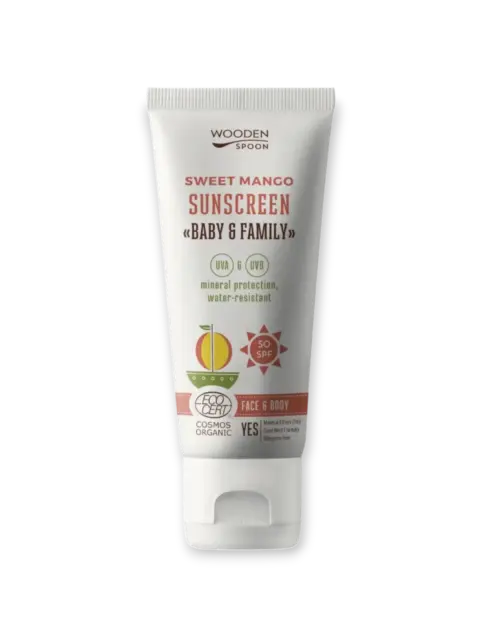
19.40 €Add to cart
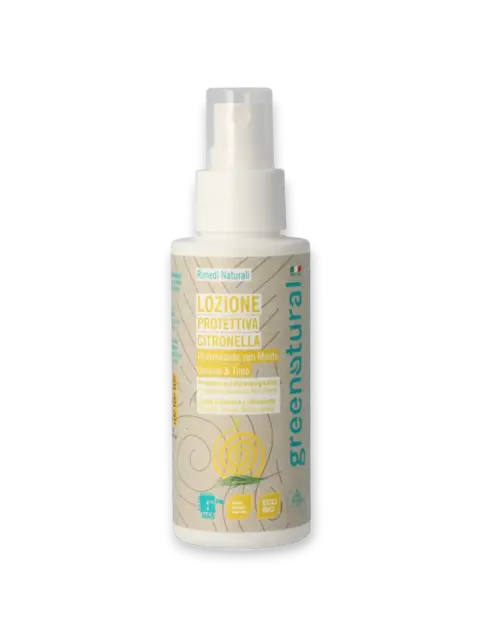
12.55 €Add to cart


