
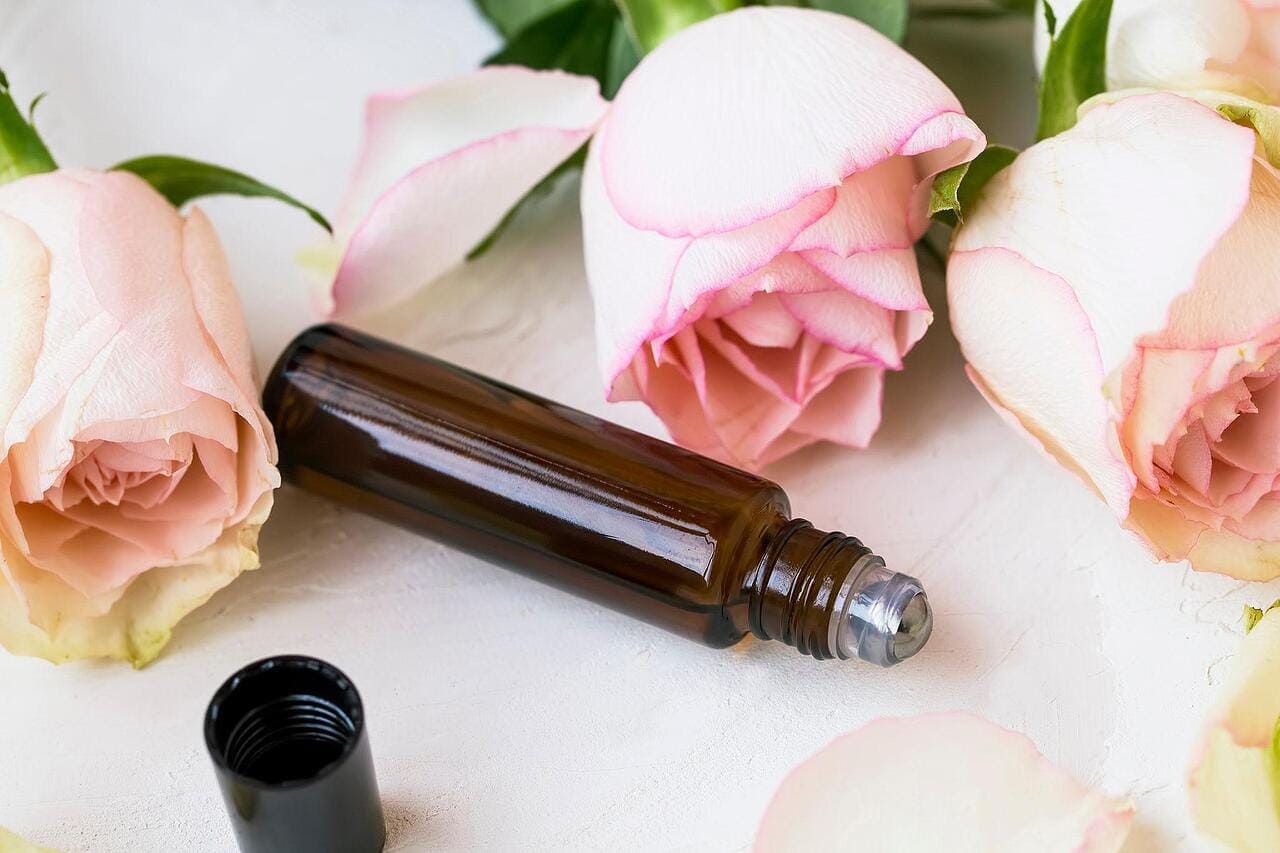
In our family, we have a family member who is allergic to perfumes purchased from the retail chain. This provoked us to look for a more natural and natural alternative to perfume that would not irritate with its strong intrusive aroma and would not cause sneezing immediately after application. And what could be better than a perfume with essential oils made at home. This venture is suitable for all experimenters, for those of you who also suffer from uncontrollable sneezing, for all those who are looking for more natural and gentle aromas. In addition, with essential oils you can create many different scents when you get acquainted with the basic principles.
How to make perfume at home with essential oils
It is important to specify that the perfume you will make at home will not be as long-lasting as those from the perfumery. This is mainly due to the fact that it will be created on an oil basis and it is more correct to call it perfume oil. The fragrance carrier is a vegetable oil (argan, almond or jojoba) that penetrates the skin, capturing the aromatic molecules of the essential oil. Since they are volatile in nature, they will evaporate and fade faster.
At their core, perfumes are complex formulas based on alcohol and water, and even there the ingredients are more complex and much more experience is required to create such a product. Making a real perfume is an art known since ancient times, but here we will not delve into the history of perfumery.
When you decide to build your perfume compositions, work only with high-quality, pure essential oils, absolutes and extracts.
What are the different concentrations of perfume?
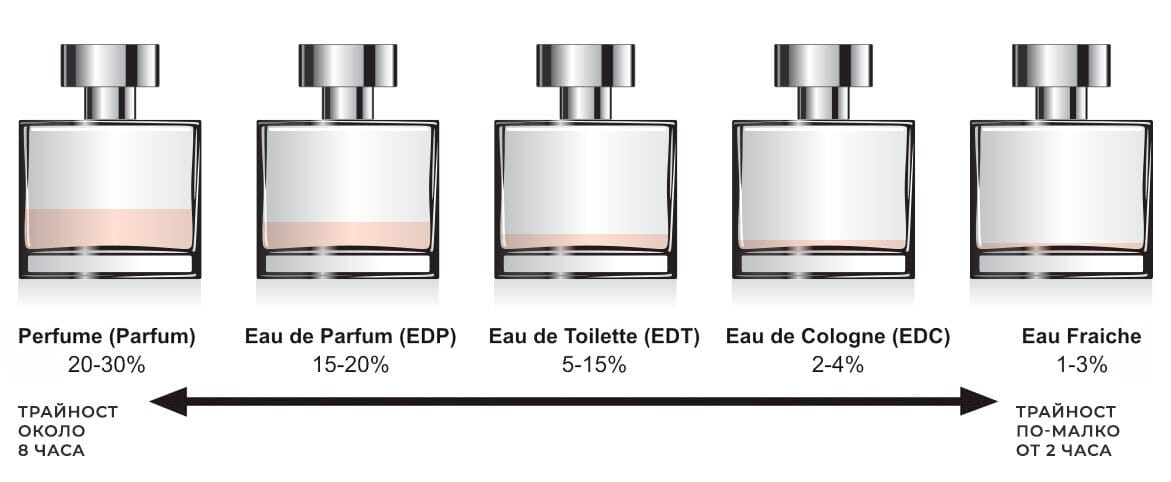
If you've been paying attention, in perfume shops you can find eau de toilette (Eau de Toilette) or eau de cologne (Eau de Cologne) or perfume (Parfum), but what is the essential difference between them? Generally speaking, fragrances are classified according to the percentage of pure essential oils and absolutes (fragrant oils that may contain other types).
- Eau Fresh is the least concentrated form of the fragrance and usually contains 1 to 3% perfume oils.
- Eau de Cologne also a little concentration of fragrance. Contains 2 to 4% perfume oils dissolved in water and alcohol.
- Eau de Toilette usually contains about 5 to 15% pure oils.
- Eau de Parfum usually has about 15 to 20% pure oils.
- Parfum (the most concentrated, rarest and most expensive) has about 20 to 30% pure oils.
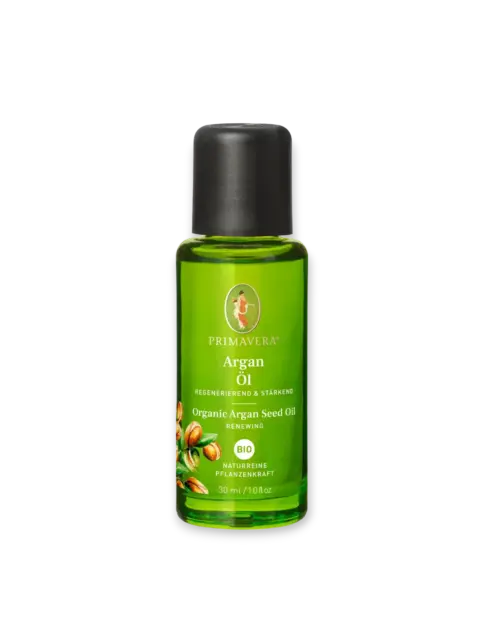
However, we will not make too complex compositions, we will not add alcohol and distilled water, but we will use the heavier form with a vegetable oil base. We say heavy because vegetable oil is more difficult to absorb into the skin, due to its larger molecules. It is good to choose a base oil that will absorb quickly and easily into the skin, and also will not have a too strong nutty aroma. We recommend using organic coconut oil, almond oil , argan oil or jojoba (essentially it is wax). It is mandatory to add vitamin E, which will stabilize the mixture, that is, it will not allow the oils to easily oxidize and go rancid.
What you will need
- 20 ml dark amber glass bottle/bottle or high quality violet. The bottle should be tightly closed with a cap.
- Roll-on applicator
- 2 tbsp. spoons of base/vegetable oil
- 30 drops of essential oils of your choice.
- 1 soup. spoon of vitamin E
- A small funnel
- Cardboard sample strips
Before we start, it's good to know
The hardest part of creating your own perfume is deciding which scents you like best. So for starters, do you want to create a floral scent or one based on woody notes? There are thousands of possibilities! Knowing what kind of scent you want to create also gives you an idea of what essential oils to mix.
You should blend the essential oils the way a musical chord is composed, with high, middle and low notes complementing each other. No matter what fragrance you want to create, start by forming the main chord, the base note, which can be more complex with more fragrances. The base note is the longest lasting in a fragrance, so it is extremely important to a perfume oil.
But how do you know if the scents you choose will go well together? Cut small cardboard strips and add a drop of each oil. The combination is quite strong, but this will give you a rough feel of whether you like this combination. Make as many combinations as possible to make sure you are going in the right direction.
Before trying the scents, wait at least 24 hours, giving the oils time to mix. Inhale the aroma slowly, hold your breath and get to know the individual scents of the essential oils and their power. Experience comes with this when you manage to create a balanced, brand new scent where none of the essential oils dominates the others. If you feel that you have overdosed on aromas, reset your receptors by inhaling ground coffee.
Learn how flavors combine
The first step to creating the perfect perfume is to learn how scents blend together. Your perfume will consist of three types of notes in varying proportions: base notes, middle notes, and top notes. Important! You must add the oils in this order.
A perfume is essentially a combination of ingredients or components, each of which adds a certain characteristic to the whole. Essential oils do not last very long on the skin as they are very volatile. Due to the small size of their molecules, they leave the skin and reach the receptors in the nose the fastest, which is why they are perceived first. Perfumers call them the top notes of a perfume and they create the first impression of any fragrance. An example of a top note is citrus, such as orange, lemon or bergamot.
Middle notes are essentially the "heart" of your fragrance, they add warmth and depth to the perfume. They provide a developing second layer to the fragrance and serve to modify the base notes – the largest molecules that provide the fixation or persistence of the fragrance and are the last impressions of the fragrance that remain on the skin.
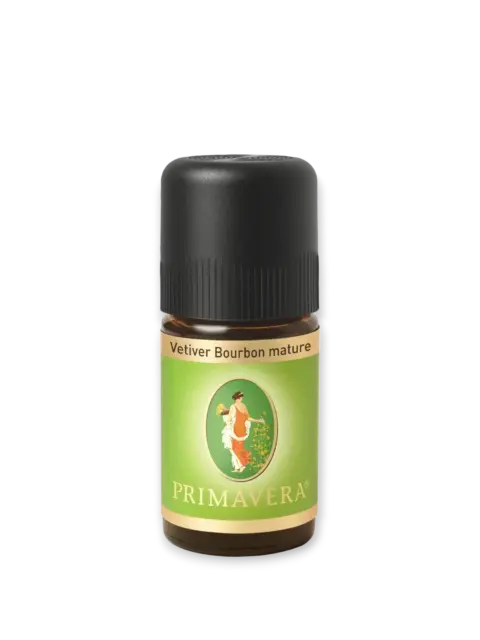
Base notes develop over time, so you may not notice them at first. But after all the other aromas fade, the base notes unfold their depth. Often they have more invigorating scents, such as cedarwood, sandalwood, vetiver, etc.
The art of perfumery consists in combining these groups of components to achieve an overall effect, whether it is deep, rich and exotic, or fresh, clean and modern.
- Popular top notes: basil, bergamot, grapefruit, lemon, lime, mint, neroli, rosemary, sweet orange.
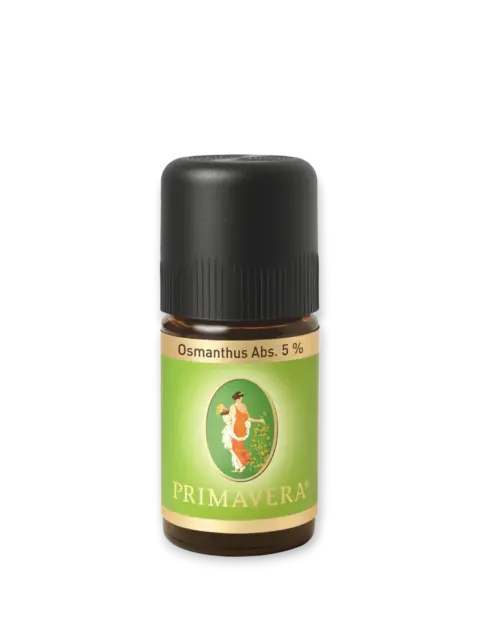
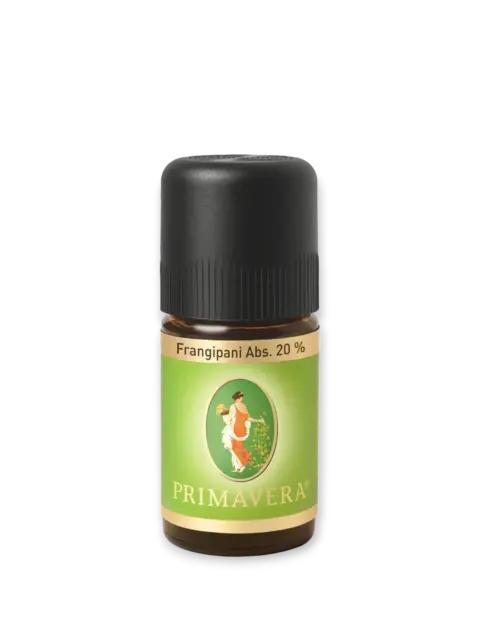
- Popular middle notes: black pepper, cardamom, chamomile, bay leaf, lavender, geranium, juniper, nutmeg, yarrow. This includes rose absolute, jasmine, osmanthus, tuberose, frangipani, mimosa, etc.
- Popular base notes: incense, cedar, cypress, ginger, patchouli, pine, sandalwood, vanilla, vetiver.
We know it's a bit confusing, and you don't need to know everything about this vast field. Therefore, in the MaKaSa online store, we have tried to make it easy for you to find out which oil, which note it has. Just filter this characteristic in the menu (or in the description of the oil itself) and you will easily find what you need.
The bottle in which you will make your perfume should be dark in color.
Once you have used essential oils and want the scent to last longer, it is important to store them in a dark bottle that does not let in light. Always shake your perfume oil slightly before applying it so that the scents mix well. Store in the dark, do not expose to direct sunlight. Note the date on which you composed the perfume and keep in mind that its maximum shelf life is 6 months. After this period, the risk of contamination and oxidation is very high.
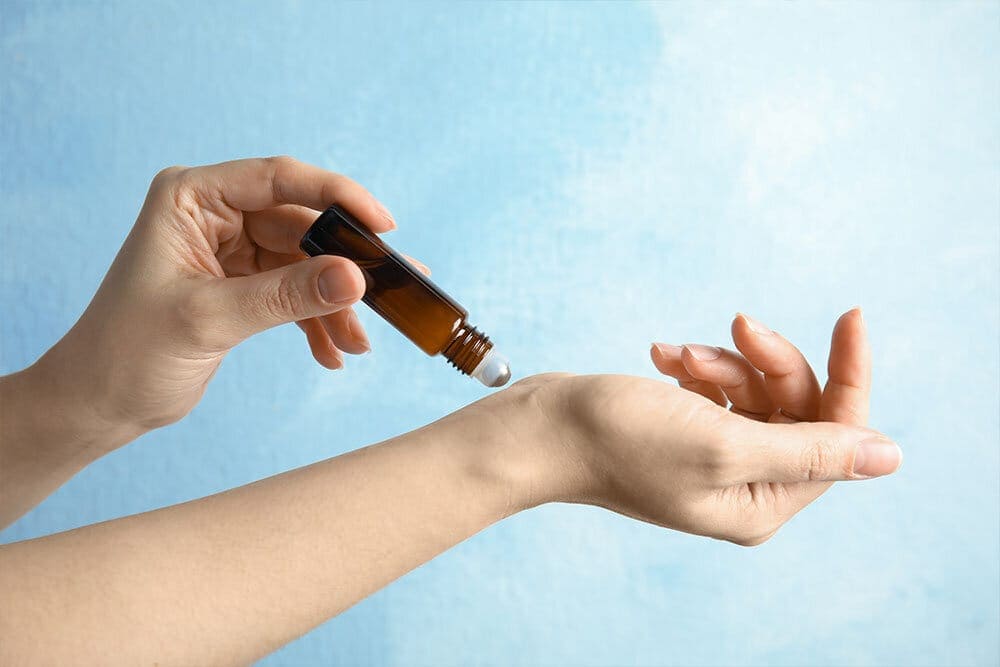
We recommend using a roll-on for essential oils. Sometimes it's more convenient to have your perfume in a small roll-on bottle that's easy to carry in your bag. Since they'll be diluted in a carrier oil, the liquid will be thicker than a standard alcohol-based perfume.
Allow time for the flavors to meld and develop to their full potential
Although you can use your perfume right away, it's best to let the scents combine and meld. If you decide to use your perfume right away, it is very likely that the fragrance will be less fragrant and the individual oils will not have had time to combine into a wonderful fragrance. That's why it's helpful to let it sit for a while, then you've given it time to reach its full potential.
A perfume made at home with essential oils may initially smell great, but over time the scents can combine into something that doesn't smell very appealing. If you let it sit, you'll get a better idea of how the combined scents will smell. We recommend a minimum of 48 hours in a cool and dark place, out of the reach of children. The longer you leave it in, the stronger the scent will be (you can leave it in for up to 6 weeks)
Experiment with your scents
If you've tried a few different combinations and you're not satisfied, you should just experiment more with your scents. Try different essential oils until you find the combination you like.
You may prefer a more woody scent and want to stick to the sweeter ones with vanilla, sandalwood, tonka bean. Or you may like very floral scents and want to use lavender, ylang-ylang, or jasmine. Maybe you appreciate fruity flavors and want to use lemon, sweet orange or tangerine.
Making perfume with essential oils, step by step
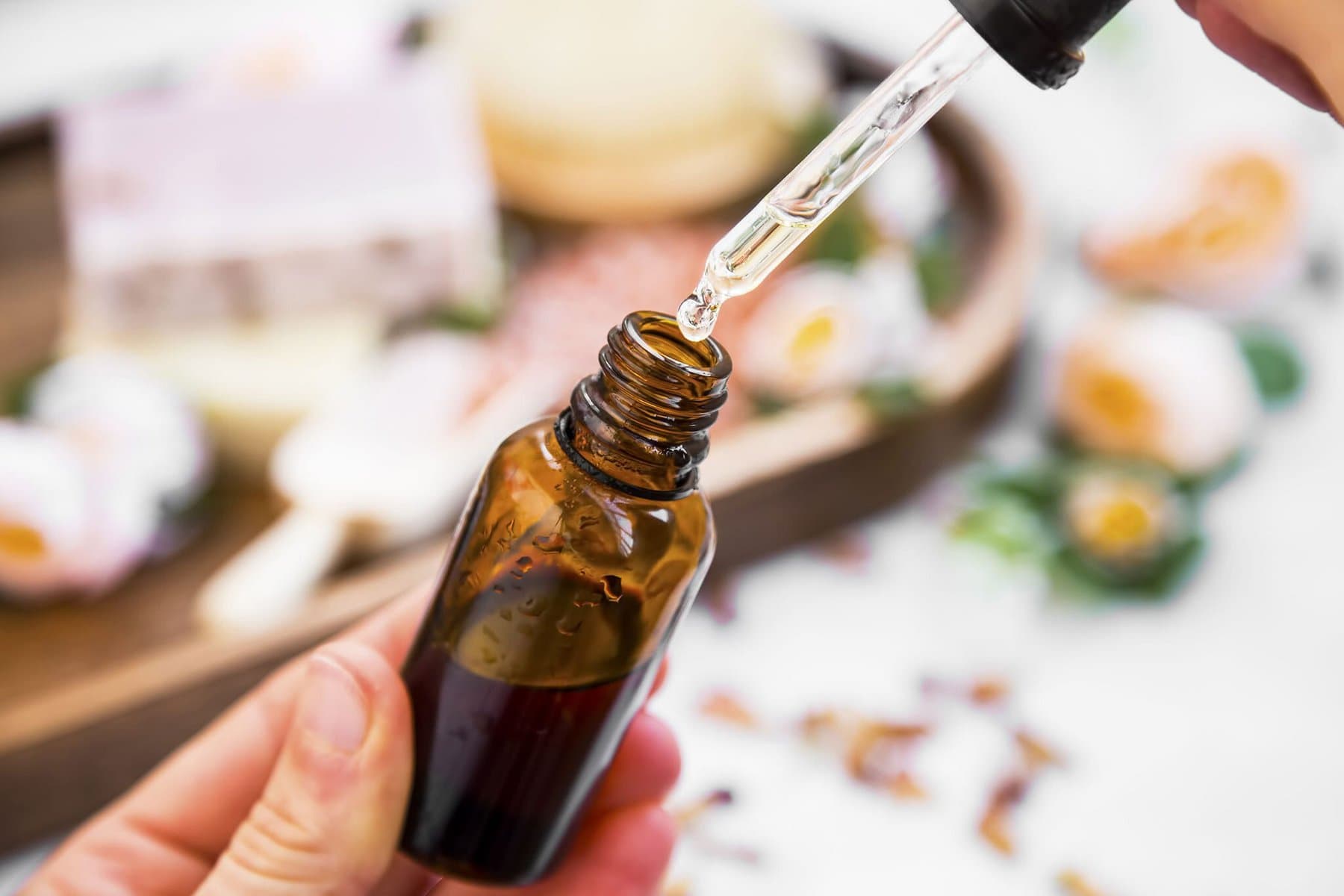
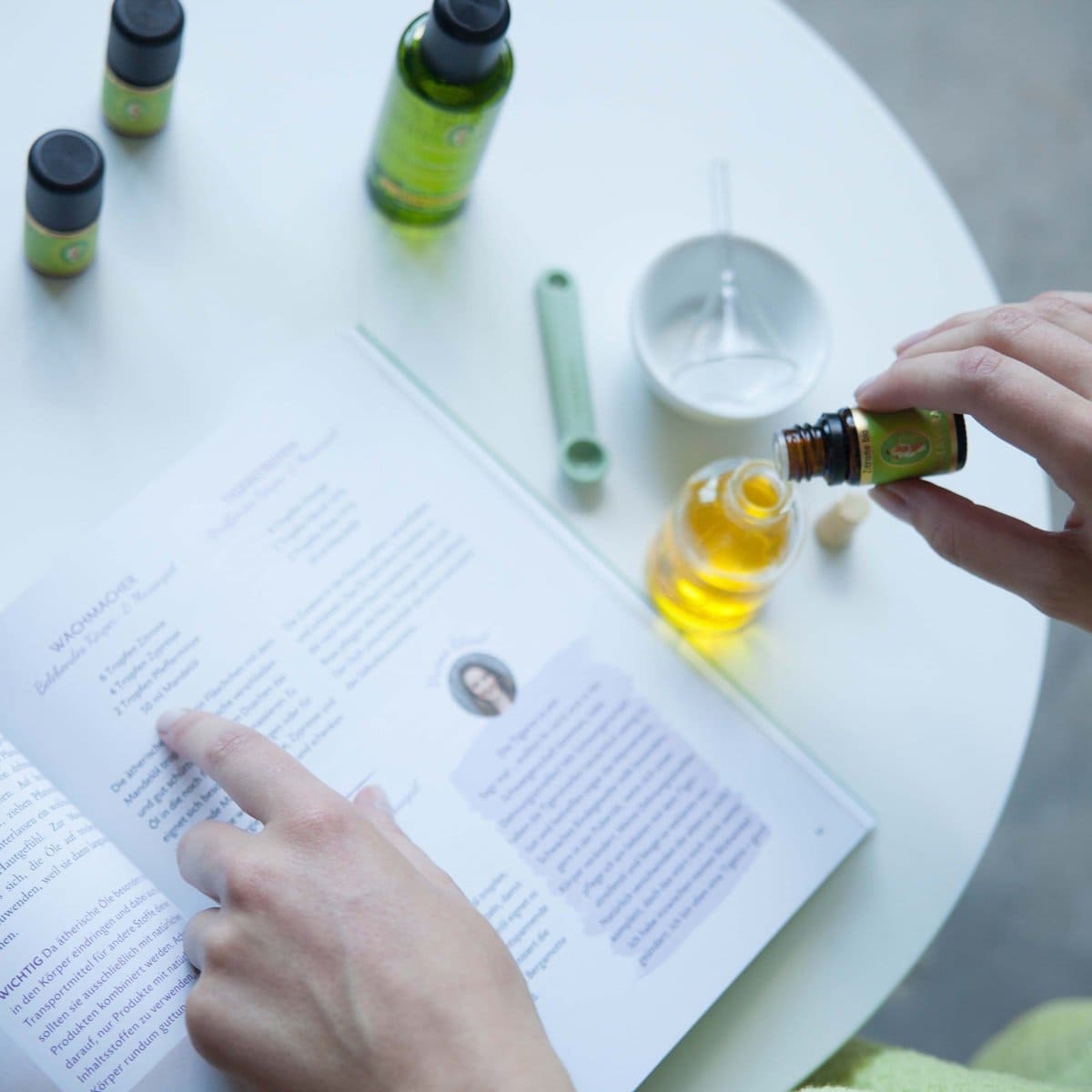
Wash the bottle well and disinfect it with alcohol (leave it to dry well). Add a base oil to it (the small funnel will help you here), and then vitamin E. In addition to keeping the mixture from contamination, Vitamin E (Tocopherol) is extremely beneficial for the skin. It improves the elasticity of cell membranes, which in turn slows down the aging process and keeps the skin healthy. Be careful when mixing the individual ingredients, try to work cleanly, without spilling.
Step One: Add the Base Note
The first step to creating your fragrance is adding the base note. Often times, base notes are earthy scents that provide good long-lasting fragrance to a perfume and can be up to 55% of your blend. This is your personal preference and you can experiment to see what scents you like. Remember, the base notes are the ones that develop their fragrance over time. You will feel their scent only after the perfume has already settled on your skin.
Step Two: Add the Middle Note
The essential oils you add will be the heart of your fragrance, the fragrance that emerges after the top note dissipates. Some people prefer to use more floral scents, but again, this is your personal preference. Often times the middle notes can be the biggest part of your blend, but again this varies from experiment to experiment.
Step Three: Add the Top Note
Finally, the last addition to your perfume oil is the top note, which will fade quickly but will be the first scent you smell when you open your perfume. Often these can be anywhere from 5 to 20 percent of the mix, but you can add more or less if you choose. You can use citrus, mint or refreshing scents for your top note. If you're not sure, try different scents and see which one you like best.
Step Four: Shake your perfume and wait before using it
After you have added all the ingredients to your perfume, shake it. This will allow the flavors to meld and blend. Then, if you're patient enough, let it sit for about a month before using it. You can use it before then, but the flavors will get stronger as it sits.
Make yourself a creamy perfume
You can also create a creamy perfume using beeswax and jojoba oil. An easy recipe to try:
Creamy perfume
- 100 ml jar
- Beeswax – 5 tbsp.
- Jojoba oil – 5 tbsp.
- Vitamin E – 5 tbsp.
- Sandalwood essential oil – 20 drops
- Vanilla extract – 18 drops
- Grapefruit essential oil – 10 drops
- Bergamot essential oil – 8 drops

Melt the beeswax over low heat in a suitable glass or ceramic container. Then add the jojoba oil until the mixture is homogeneous. Let it cool slightly and then proceed to add the essential oils. Store in a small jar with a tight-fitting lid.
A little inspiration with different combinations
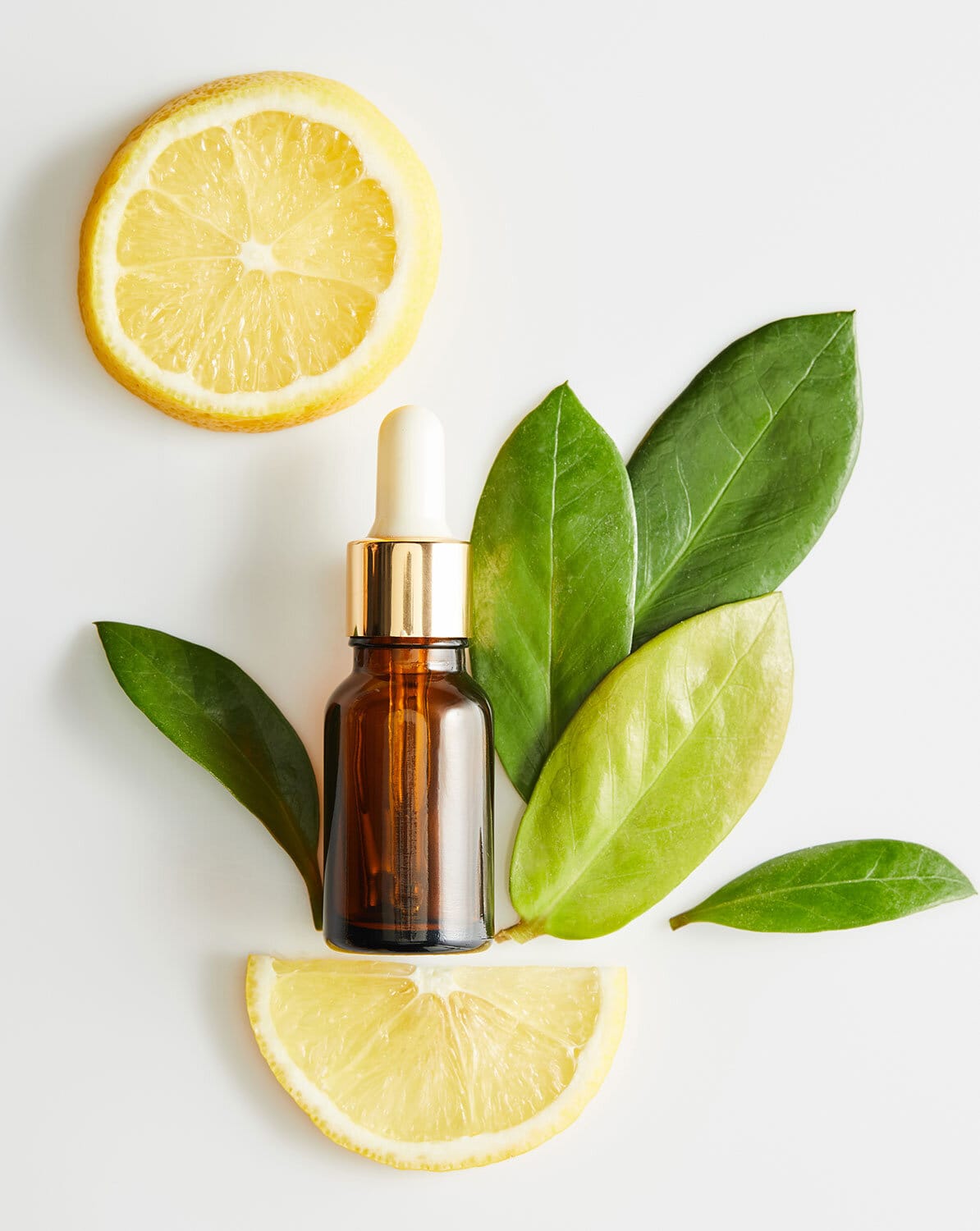
If you need a little inspiration to get you started, here are some possible essential oil combinations to try depending on your mood, personality and personal preference.
- Refreshing and energizing – grapefruit essential oil, ginger, vetiver
- Romantic and full of longing – essential oil of rose, lime, vetiver
- Sensual and deep – sweet orange essential oil, ylang-ylang, sandalwood
- Sweet and summery – essential oil of lavender, chamomile, cardamom, cedar, geranium
- Bright and refreshing – essential oil of mint, rosemary, lemon, sage, juniper
- Herbal and woody – essential oil of spruce, juniper, cedar, vetiver, bergamot
- Rich and spicy – lavender, clove, nutmeg, vanilla, ylang-ylang essential oil
Perfume recipes with essential oils
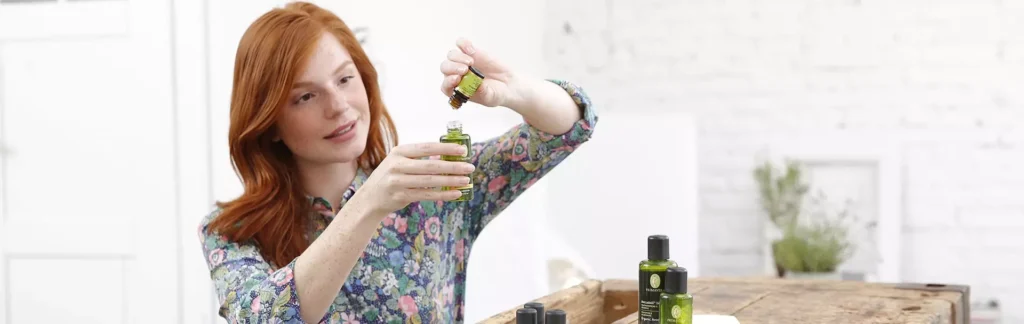
We offer you three perfume compositions that you can try at home. Mix the drops in a dark bottle with a base oil and let the mixture age before use.
Perfume composition "Gentle caresses"
- Lavender essential oil – 2 drops
- Clove essential oil – 4 drops
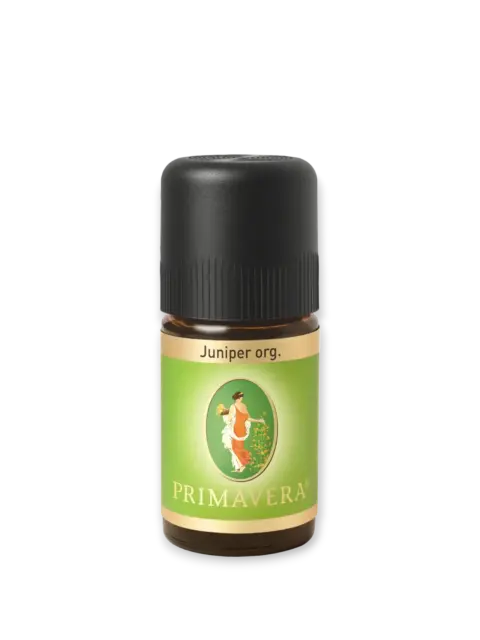
- Juniper essential oil – 3 drops
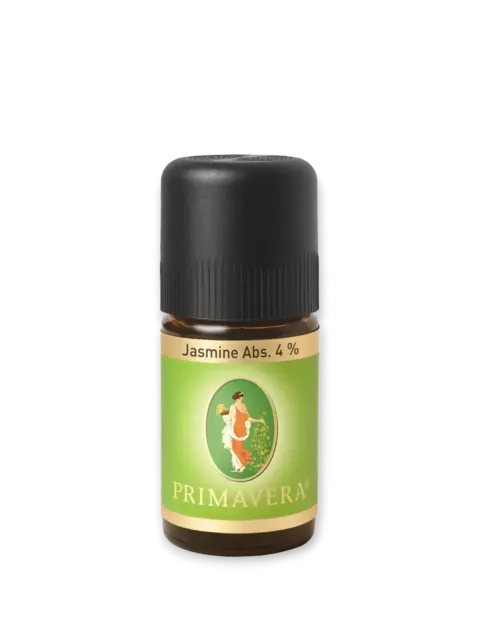
- Jasmine absolute – 2 drops
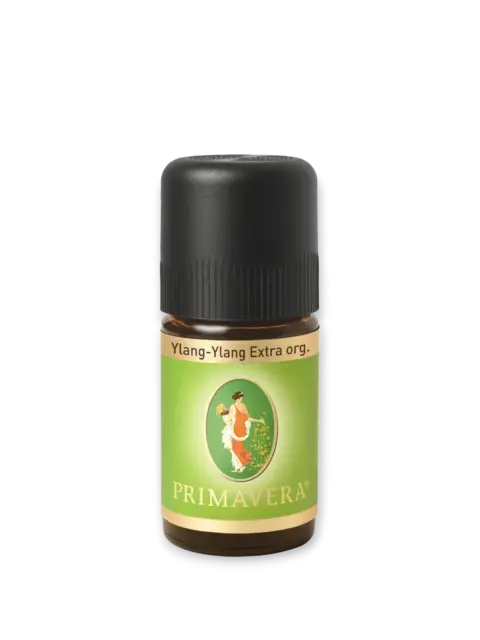
- Ylang-ylang essential oil – 3 drops

Perfume composition "Floral Magic"
- Patchouli essential oil – 2 drops
- Lavender essential oil – 2 drops
- Ylang-ylang essential oil – 3 drops
- Jasmine essential oil (absolute) – 1 drop
Perfume composition "Secret of the East"
- Nutmeg essential oil – 2 drops
- Mei Chang Essential Oil – 1 drop
- Jasmine absolute – 4 drops
- Sage essential oil – 10 drops
- Sandalwood essential oil – 4 drops
- Frankincense essential oil – 4 drops
Conclusion
Homemade perfume with essential oils is a gentle, natural alternative to conventional fragrances – especially when your skin is sensitive. Work with high-quality oils, respect the proportions of the notes and give the composition time to develop. If you suspect sensitivity, test on a small area of skin and consult a specialist if necessary.
More interesting articles from the blog
- Blending essential oils - theory and practice
- How to use essential oils safely?
- The exotic scent of jasmine absolute
- Forest Pansy Absolute – the gentle violet magic
- Lavender – the essential oil of antiquity
Categories
- Aromatherapy
- Essential oils
- Carrier oils
- Diffusion methods
- Natural cosmetics
- Recipes with essential oils
- News

Sources: Wikipedia, shop.perfumersapprentice.com · aromaweb.com
https://basenotes.com/threads/primer-on-how-to-make-perfume-version-1-0.158437/
Written by: Kremena Petrova
10.90 €Add to cart
12.90 €Add to cart

7.90 €Add to cart

15.90 €Add to cart
14.90 €Add to cart
16.90 €Add to cart
26.90 €Add to cart
13.90 €Add to cart
31.90 €Add to cart

15.90 €Add to cart
79.90 €Add to cart
11.90 €Add to cart
14.90 €Add to cart
59.90 €Add to cart
5.90 €Add to cart
Price range: €11.90 through €18.90Options This product has multiple variants. The options may be chosen on the product page
Price range: €9.90 through €13.90Options This product has multiple variants. The options may be chosen on the product page
10.90 €Add to cart


