
An investment in health or just a moisturizer?
If you look at the aroma diffuser market today, you will notice a huge price range. In online stores and mass-market platforms, you can find devices priced from 10-20 euros , while specialized brands like Primavera offer models exceeding 75 euros . At first glance, they all do the same thing – emit cold steam.
But is that really the case? Why can one seemingly simple device cost as much as a doner, and another as much as a designer piece of furniture? The truth is that the difference is not just in the logo, but in the technologies, materials, and safety that directly affect your health and the therapeutic effect of essential oils.
In this article, we will look at the “invisible” factors that determine the price of a diffuser, and compare high-quality German devices (like those from Primavera) with mass-produced budget models.
1. The Materials: Plastic vs. BPA-Free and Sustainable Resources
The most obvious difference between a cheap and an expensive diffuser is the material it is made of.
- Cheap models: They are often made of ordinary plastic (low-quality polypropylene), which is not resistant to the aggressive effects of essential oils. Citrus oils, for example, can corrode cheap plastic over time, leading to microcracks and even the release of harmful chemicals into the air you breathe.
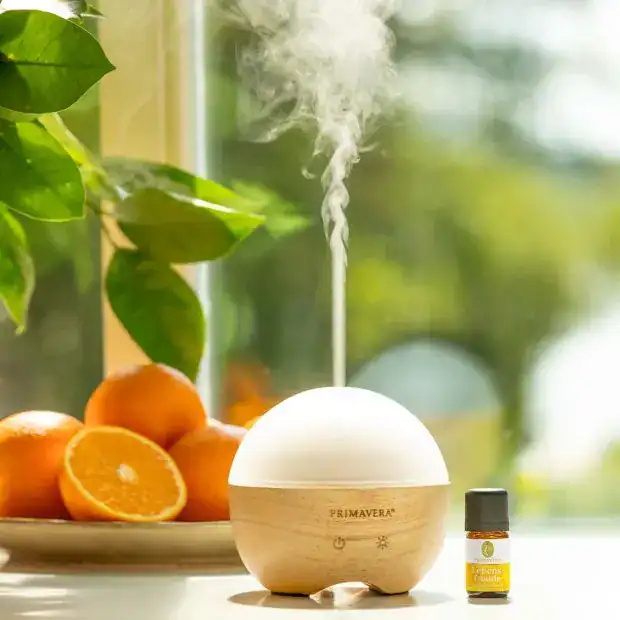
- The high class (Primavera): They use specialized, high-quality, BPA-free polymers that are medically certified and resistant to corrosion by oils. Additionally, premium models often incorporate natural materials like bamboo, sustainably harvested rubberwood, ceramic, or glass. This isn’t just for aesthetics—glass and ceramic are completely inert and don’t change the composition of the oil.
2. The heart of the device: The ultrasonic membrane
The atomization technology is what turns the water and oil into a fine mist.
- Budget options: They usually use cheaper ultrasonic membranes with a lower frequency of oscillation. The result is often “wet” vapor – the droplets are too large and heavy. They fall quickly to the floor or furniture, instead of lingering in the air, which reduces the therapeutic effect of inhalation. The life of these membranes is often short – between 6 months and 1 year.
- Primavera technology: German engineers use membranes operating at specific high frequencies (often 1.7 MHz or 2.4 MHz) that break the essential oil into microscopic nano-particles. This “dry” mist floats in the air for hours, ensuring maximum absorption of the molecules through the respiratory system. This is the difference between simply making the room smell nice and actually providing aromatherapy.
3. Safety and Sensors
Essential oils are flammable, and electrical appliances with water pose their own risks. Here, price plays the role of insurance.
- The mass "Chinese" models: They often have basic protections, but can overheat if the water-free shut-off mechanism doesn't work properly. Cheap adapters are also a common cause of damage or short circuits.
- The Primavera standard: The devices undergo strict safety tests (TÜV, etc.). They have precise gravity sensors and overheating protection. If the device is tilted or the water runs out, it stops instantly. This makes them safe for use in children's rooms and during sleep, without the need for supervision.
4. Noise and Comfort
Aromatherapy is often associated with relaxation and sleep.
- The cheap diffusers: They often have an irritating humming sound from the fan or gurgling of the water, which can interfere with sleep for more sensitive people.
- The premium segment: They are designed to be “whisper-like.” The fans are noiseless, and the design of the inner cover muffles the sound of water movement.
5. Ethics and Origin
When you buy a device for 15 euros , it is difficult to guarantee that it was produced under ethical working conditions or with care for the environment.
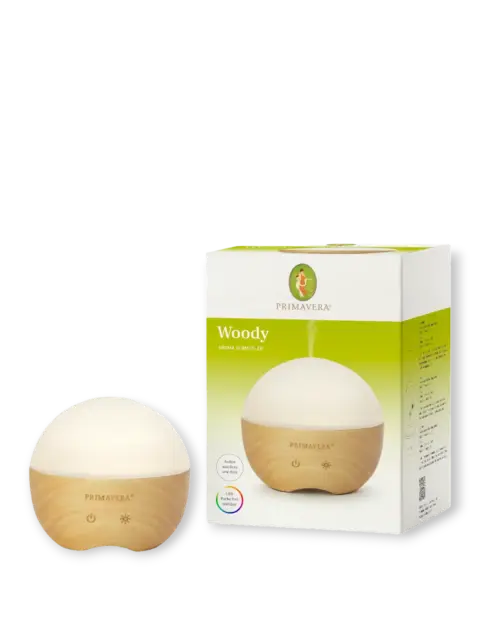
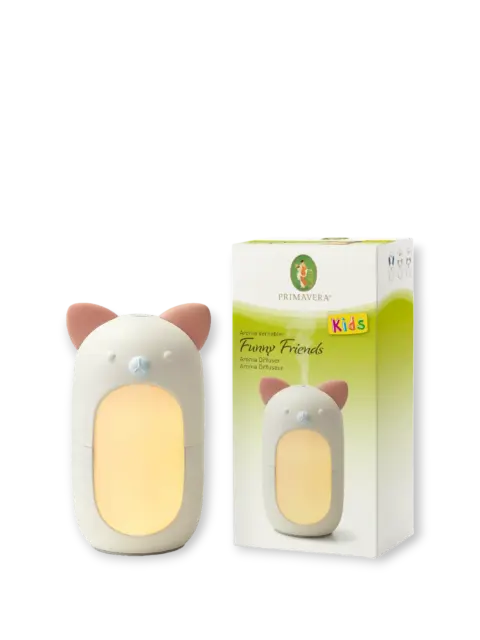
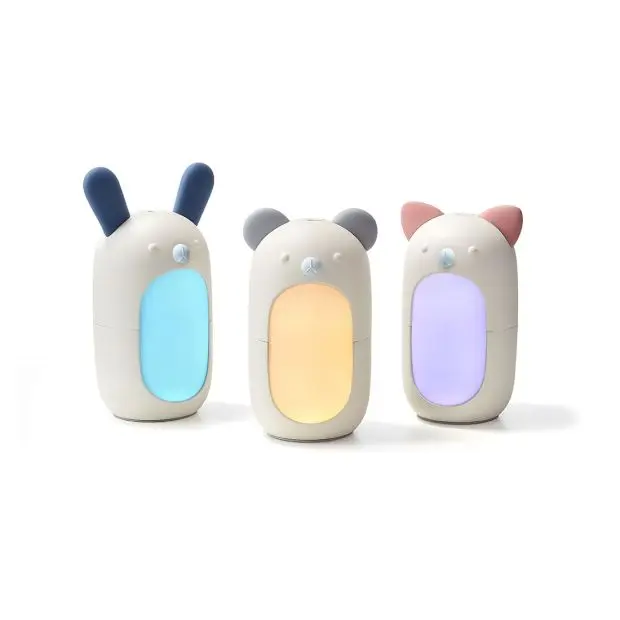
- Spring Season: The brand is known for its sustainability philosophy. Diffusers as a model “Woody” or “Funny Friends” are not just plastic boxes, but products with an ecological footprint in mind – from recyclable packaging to repairability and a long life cycle.
6. Sound as part of therapy: Why isn't “Funny Friends” just a speaker?
You’ll often find diffusers on the market with loud advertisements for “built-in Bluetooth speakers.” This is often a marketing ploy to justify a higher price by adding unnecessary electronics. With Primavera, the approach is radically different: here, sound is not entertainment, but a functional part of aromatherapy.
When creating the “Funny Friends” model, every detail was subordinated to one goal: deep, restorative sleep and calming the nervous system.
Here's the difference between "marketing noise" and "therapeutic sound":
- Specially composed sound environment: The music in Primavera diffusers is not random. It is pre-programmed with nature sounds and gentle melodies, whose frequency is selected to slow down the heart rate and help the brain enter the alpha level (a state of relaxation). This is a conscious choice by the manufacturer to provide “sound hygiene” instead of leaving the choice of random songs from the playlist.
- Lack of “Digital Noise” (Digital Detox) Bluetooth diffusers require a smartphone connection. This means that if you bring a device that emits signals into your child's room or bedroom, you risk having your peace of mind disturbed by the sound of a text message, email, or ad notification. “Funny Friends” works autonomously. It's designed to be an "island of tranquility"—no phones, no Wi-Fi radiation, and no digital distractions. This is a mental health concern that cheap models neglect.
- Acoustic safety for the little ones Cheap speakers often have poor sound quality or excessively loud bass that can startle a child. The sound in Primavera devices is calibrated to be soft, with an unobtrusive backgroundThe three power levels are limited to levels that are safe and comfortable for even the most sensitive children's hearing during sleep.
If you see a diffuser for 20 euros that has a built-in Bluetooth speaker, a clock and lights up in 7 bright colors, ask yourself: How much of that money went to the ultrasonic membrane? Usually the answer is “almost nothing”. Manufacturers add cheap electronics to distract from the fact that the main component – the atomizer – is of low quality. These “combines” often break down quickly, the sound quality is poor, and the vibrations from the bass can further damage the delicate steam mechanism. A true diffuser is a device for relaxation and therapy – it should be quiet and discreet, not replace your audio system.
When you choose Primavera, you are not paying for an “extra speaker”. You are paying for a complete sleep ecosystem , where aroma, light and sound work in sync to ensure health and harmony for your child. This is the difference between buying a “gadget” and investing in full-fledged aromatherapy.
7. The “Big Tank” Myth (300 ml, 500 ml and more)
Many cheap models are advertised with huge water tanks, promising “all-day” operation. In professional aromatherapy, however, bigger is not better . With a 500 ml tank, you need to add a huge amount of essential oil (often 20-30 drops) to achieve therapeutic concentration. Otherwise, you are simply humidifying the room with lightly scented water, with no real effect on health. In addition, water that stays in the device for too long becomes a breeding ground for bacteria. You also risk the oils oxidizing if they are exposed to oxygen for too long, which will lead to the loss of their therapeutic properties. Primavera professional devices have compact tanks (about 100-200 ml), designed for optimal air saturation and freshness of the mixture.
Comparison Chart: Primavera vs. Mass Budget Diffuser
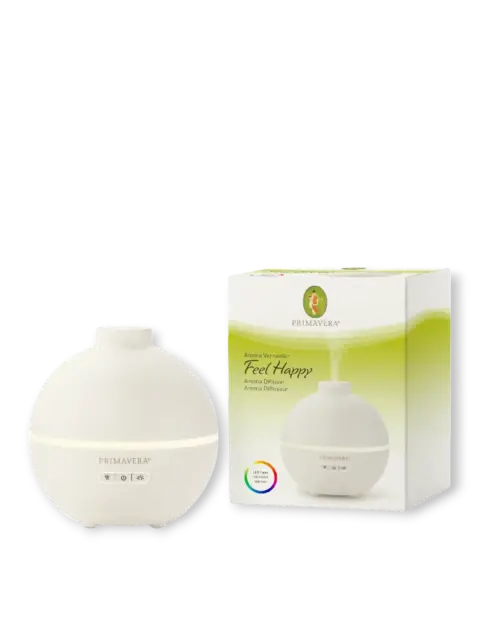
| Characterization | Budget Diffuser | Primavera Diffuser (eg Woody, Feel Happy) |
| Material | Ordinary plastic (often PP) | BPA-Free plastic, Glass, Ceramic, Wood |
| Device life | Often 6-12 months | Designed for long-term use |
| Steam quality | Large drops, wet surfaces | Fine mist, long-lasting retention in the air |
| Impact of oil | Risk of chemical reaction with plastic | Retains 100% of the therapeutic properties |
| Noise | Frequent distinct fan noise | Quiet, suitable for bedrooms and SPAs |
| Price | 10 € - 30 € | 37 € 100€ |
Conclusion
Choosing a diffuser depends on your purpose. If you're simply looking for a humidifier or a nightlight, inexpensive models from mass-market sites can do the trick.
But if your goal is true aromatherapy – healing, relaxation and health care through the power of nature – compromising on the quality of the device is a compromise on the effect of the oils. Primavera diffusers and other established European brands are an investment that pays off through their safety, effectiveness and longevity. Because there is no point in buying quality, organic essential oil only to waste it in a low-quality device.
More interesting articles from the blog
- How to choose an essential oil diffuser?
- Passive diffusion, what is it?
- 4 diffuser apertures to achieve your goals
- Germs, Bacteria and Essential Oil Diffuser!
- Four Diffuser Scents Suitable for Winter